Sambal oelek (sometimes just called sambal) is a wonderful, spicy condiment originating in Indonesia. It has now become popular worldwide, especially in Asian countries as well as in North America and you will likely be able to find a jar of it anywhere you buy Asian condiments.
Sambal is used to spice up everything from eggs to noodles, fried rice, meats, seafood, and soups. Sambal Oelek is made from red and green chilies (typically cayenne) which are slowly simmered with ginger, garlic, shallots, scallions, palm sugar, lime juice or zest, and sometimes tomato, tamarind, and shrimp paste. There is a raw version of sambal that is made in a mortar and pestle, called sambal mentah.
It is often left with the seeds left in, rather than being a smooth purée like other hot sauces tend to be. It is bright red in color and the homemade versions often have an oily texture and visible oil on the top. Because this sauce doesn’t typically contain vinegar or acid, it is best kept in the fridge after opening.
As mentioned, you will likely be able to find sambal at any grocery store (it is most commonly sold in clear plastic jars with a green lid!) as there are over 200 known varieties of sambal. But if you cannot get hold of it and want to keep your life spicy, here are some great substitutes for sambal oelek!
1. Thai Hot Sauce (Sriracha)
Probably the closest substitute to sambal is the world-renowned hot sauce sriracha! Similar in ingredients, sriracha and sambal both contain chilies, garlic, and salt. But sriracha also tends to contain sugar and vinegar. It is also puréed until smooth so it is pourable and tends to be a little less spicy than sambal.
People are split on which of these two famous Asian hot sauces is superior. If we go by sales, then sriracha is the winner. But if we go by how passionate people are about their hot sauces, then sambal is a close contender!
Either way, sriracha will work to suffice sambal in almost all recipes and is likely something you already have on hand. If you don’t, it is very affordable and does not need to be refrigerated, making it an ideal addition to your pantry!
3. American Hot Sauce
Hot sauce is one of the most popular condiments in North America, so it will be easy to find in any grocery store, and probably very affordable. Most American hot sauces are less spicy and contain a lot more vinegar, making them more acidic than sambal.
These hot sauces come in a variety of brands, are something more orange in color, and will work for most recipes that require sambal.
You may not be able to replace sambal with American hot sauce at a 1:1 ratio because American hot sauces are much more acidic or sweet, so make sure you taste-test your recipe as you go.
4. Tomato Sauce (Plus Spices)
Canned tomato sauce has a similar consistency and color as sambal, but is obviously not spicy at all. But you can add cayenne pepper, chili powder, hot sauce, or chili flakes to create your own chili sauce, which will be similar to sambal!
Another great tomato product to use would be tomato paste thinned out with water and mixed with spices. As a last resort, you could use tomato salsa! Made popular by Mexican cuisine lovers, salsa is often made with cooked tomatoes, cooked chilies, onion, garlic, and sometimes additional acid or sugar.
Any one of these tomato substitutes will work well in place of sambal, but keep in mind that these ingredients may contain ingredients not traditionally found in sambal, such as peppers (as in the case with salsa) or Italian herbs (as in the case of tomato marinara sauce.)
In any case, feel free to spice up the tomato product as much as you see fit and use it in place of sambal.
5. Harissa
The main ingredients in traditional harissa include chilies, cumin, coriander, caraway, olive oil, and salt, making it similar to sambal. It uses very ripe chilies and has a signature bright, dark red color and higher oil content.
Harissa, like sambal, includes chili seeds and skin and is never puréed so there is more texture to this sauce than to other ones on this list.
Harissa is almost always raw, so it spoils quickly. It is often prepared with a thin layer of oil on the top to keep it from spoiling, which means it can sometimes be expensive. But, if you can find good harissa (check a specialty store!), it will make a lovely substitute for sambal and offer a special depth of flavor and color to any recipe.
6. Gochujang
This spicy Korean chili paste is added to soups, rice, and meat dishes and is known for being full of heat and umami. It has such depth of flavor because, unlike the other options listed here, gochujang takes months to make.
Guchujang’s primary ingredient is fermented rice, soy, and barley malt, which are aged and mixed with chilies.
The result is a paste that has a depth of flavor that you cannot get from typical hot sauces. Gochujang can range from mild to very spicy, so take note when using this as an alternative to traditional chili paste. This condiment is famous in Korea for making even the blandest dishes, like steamed rice, into elevated powerhouses of flavor!
7. Cayenne Pepper
Cayenne peppers are a common ingredient in sambal, so it is natural to use them as a replacement for sambal. When using fresh cayenne, make sure you are careful as the seeds and pith are very spicy! You may want to add a little at a time and test for heat rather than adding fresh cayenne 1:1 for sambal.
If you’re using dried, ground cayenne pepper, you may want to mix it first with a bit of water to make a paste, or simply sprinkle the powder (or red chili flakes) onto whatever you are eating that needs a little extra spice.
This is an excellent way to add heat in a pinch but will not have as much depth of flavor as a delicious sambal, so you may want to consider adding cayenne pepper in combination with another item from this list for maximum flavor!
8. Make Your Own Sambal
If you have a mortar and pestle, or a small food processor, you can acquire most of the ingredients and quickly whisk up your own sambal. The only ingredient you might have a hard time finding is shrimp paste, but you can make sambal without it.
Grind up the peppers, garlic, ginger, sugar, salt, and whatever else you are using until you have a sambal-like consistency, and then store in an airtight container. This sauce can also be cooked or puréed, so feel free to play around a little until you get your sambal recipe just right!
Sambal oelek is an incredibly popular Indonesian ingredient and if you’ve ever tried it, you will know why! Sambal has a depth of flavor that is not achieved by plain chili paste or hot sauce and is an excellent way to spice up just about any recipe. It is a great ingredient to have on hand for all your spicy recipes!
If you’re a fan of the Blood Mary cocktail, you’re a fan of celery salt! Or, if you like Chicago-style hotdogs! Celery salt is so beloved in America, it is believed to be one of the signature spices in KFC’s secret spice blend!
You will find celery salt on ingredient labels all over the grocery store. It is the primary ingredient in the popular dried seafood seasoner Old Bay, and is popular in salad dressings, coleslaws, salads, dry rubs, and more.
In its most simple form, celery salt is just that… dried celery plus table salt. It may also contain anti-caking agents as most table salts do. It may in some cases also contain garlic, onion, lovage, or pepper.
Celery salt is available in a variety of other flavors, textures and spice levels. Most people have celery salt in their spice cupboards, and some folks even use it to help reduce their salt intake while increasing their nutrition. Now, there isn’t a lot of nutrition in celery salt. Its primary ingredient is salt, so it should be enjoyed in moderation.
If you find yourself in need of celery salt but don’t have any in the pantry, here are some great alternatives!
1. Fresh Celery
The only thing better than celery salt is fresh celery. If you’re a celery lover, that is!
Fresh celery is affordable and those who like it tend to like it a lot. Fresh celery is one of the primary ingredients in soups, stocks, and sauces because it is one of three ingredients in a traditional mirepoix—the French trilogy that is in just about everything!!
Along with carrots and onion, celery is used to season meats, poultry, fish, and other vegetables and has also become popular for an afterschool snack because it is high in fiber and low in fat. Celery has a great crunch to it too (and we heard it goes great with peanut butter!)
Either way, if you need celery salt, you can certainly add fresh celery (including leaves) to recipes when it works. You will also need to add salt to whatever you’re making as fresh celery contains none.
2. Dill Seed or Dried Dill
Although dill and celery are quite different, they are often found in the same dishes, meaning dill will make a fine substitute for celery salt in most cases. Dill is especially great in salad dressings, on potatoes and vegetables, with fish, or in butter or cream sauces.
Dill is very popular in fresh cuisine, as well as in many European cultures because of its robustness and long growing season. Dill seed is a primary ingredient in pickles and many dips and spreads, so it is often an easy ingredient to find and can certainly be used as a replacement for celery salt.
3. Dried Mustard
Now you may be thinking that mustard and celery don’t have much in common, but they do! They are both incredibly high on the bitterness scale!
Mustard (seeds or prepared) is an excellent ingredient to use in small amounts for salad dressings, dips, spreads, sandwiches, and sauces.
It is not uncommon to add both mustard and celery salt to the same dishes such as potato salad or coleslaw, so if you have one but not the other, folks might not know what they’re missing! Dried mustard is often just ground mustard seeds so you will need to adjust the salt to your liking.
4. Celery Seeds
Celery salt is typically made from dried celery seeds blended with salt, so if you have dried celery seeds, you can make your own at a pinch! You can also add dried celery seeds whole (with some extra salt) into certain recipes and it will add a nice crunch to your recipe.
This is especially true for salad dressings. If you want to, you can also grind your own celery seeds into a fine powder (a coffee grinder or very high-power blender works best for this) and add salt, to make a quick celery salt of your own. Store in an airtight container.
Note that table salt will be the best bet for salt because it often contains the anti-caking agent you’ll need to combat clumpiness!
5. Old Bay Seasoning
If you open your cupboard, you will likely find a tin of Old Bay Seasoning somewhere. Old Bay Seasoning has developed a serious reputation for being the best spice blend to use for seafood, but as any Old Bay fan knows, you can use this magical ingredient for just about anything!
Old Bay is described as “versatile and not overpowering” and is most famous for its use in crab salad. One of its primary ingredients is celery salt, so using Old Bay as a replacement for celery salt is a no-brainer! You can use this to substitute celery salt 1:1.
6. Fennel Seeds
Fennel and celery are both slightly bitter as seeds, but very fresh and vibrant before they are dried. Fennel has a slight licorice flavor which, like celery, is something you either love or can’t stand.
If you love fennel, then feel free to use it as a replacement for celery salt. You can use the seeds whole, or grind them up fine (again, in a coffee grinder) and add salt.
You will want to use 1 part salt for every 5 parts seed. You can then use this salt on potatoes, eggs, salads, meats, cheese spreads, and more. Fennel is an underrated seasoning, and like celery salt, it will elevate just about anything you are cooking to the next level!
7. Make Your Own Celery Salt
Unlike some spice blends which are closely guarded secrets, making your own celery salt is actually quite easy. First, you’ll need some fresh celery… more specifically, some celery leaves. This is actually a great way to use up those leaves that would typically get tossed.
Gather them up and put them on a cookie sheet. Do not add anything, and bake in a 200 °F oven for about 25 minutes or until the leaves are very crispy (but not browned!)
Let them cool, and then grind them in a spice blender. You can then measure this powder out. For every 1 tbsp of celery powder, you will want to add ½ tsp table salt. Blend well. You can store this in an airtight container for several weeks, but we think once you make it, you will use it up quickly!
This homemade version has a vibrant green color and certain freshness that you just can’t find with the store bought version.
Have you ever been in a situation where you’ve got guests over for brunch, and you’ve just promised everyone a Bloody Mary, but when you go into your pantry, you can’t find the celery salt?! Well… have no fear! You now have 7 different ways to solve your celery salt problem. Now, not all of these will work in a cocktail but many of them will.
You might even find a new favorite way to use your Old Bay seasoning! We encourage you to try any number of substitutions for celery salt on their own or in combination with each other the next time you find yourself out of celery salt!
Beef tongue is a delicacy in Japanese cuisine and can be prepared in many different ways: grilled in thickly or thinly sliced cuts. It can also be eaten rare, when the tongue is grilled just a few seconds on each side.
The beef tongue recipe below provided by Chef Asai Masashi is super delicious. The beef tongue is first boiled to make it more tender, then grilled before finishing the beef tongue in the oven. Enjoy!
Using a pressure cooker, boil the beef tongue with the carrots, parsley and radish stems for about 45 minutes.
After boiling the beef tongue, peel off its skin while it is still warm. Make sure to do this while the beef tongue is still warm, as it is difficult to peel it nicely after it has already cooled down.
After peeling the skin, let it cool down. You can keep it in the fridge overnight before cutting it into the size you want.
Grill the beef tongue with a pinch of salt and black pepper. When it is ready, apply a layer of shoyu (soy sauce) on top of it.
Then apply the garlic butter and leave it in the oven for 5 to 6 minutes (depending on the power of the oven) until the garlic butter turns slightly brown.
It is now ready to serve.
Garlic Butter
Mix the butter, salt, chopped garlic and chopped parsley.
Pelte is a traditional Turkish desserts that is similar with jelly and was traditionally made with lemons or other local fruits. It is also a popular dessert in North Macedonia, though the Macedonian recipe is slightly different from the Turkish one.
For the yoghurt pelte, combine the cream and sugar in a saucepan.
Bring the mixture slowly to boil and stir in the soaked gelatin.
Allow to cool for 10 minutes and stir in the yoghurt.
Pass the mixture through a fine sieve and then pour into a deep tray.
Place in the fridge and leave to set overnight
Lemon Curd
Add the sugar, eggs, lemon juice, butter cubes and agar agar into the Thermomix bowl and set at speed 4 at 100C for around 13 minutes, slowly bring to a gentle boil.
When it reaches a boil, remove from the bowl.
Let it cool down.
Plating
Spoon a small amount of the lemon curd onto a round plate, spreading across the plate using a palette knife.
Using a knife or a cutter, cut yoghurt pelte into equal rectangular pieces.
Replace one on the lemon curd.
Cut a round slice of the mandarin and burn the white skin until it gets dark.
Gently place mandarin pieces on top of the yoghurt pelte.
Serve with baby mint leaves and (optional) dehydrated yoghurt pieces.
Christmas is that magical time when friends and family come together for fun, togetherness, and fantastic food. For any cook, it’s the culinary high point of the year when traditional foods we love take center stage. It’s hard work, but it’s worth all the effort for the happy memories we create.
While many of us enjoy our Christmas meal on December 25th, Christmas Eve is at the center of the celebrations in many countries. In the Christmas tradition, December 24th was the final day of the 40 days of religious fasting, when consuming meat would be forbidden. So Christmas Eve dinners tend to favor fish-based menus, while on Christmas Day, a meat-based feast could be enjoyed with relish.
Some countries like Georgia, North Macedonia and Ukraine, which follow the Julian calendar, will observe Christmas on January 7th, while Armenia celebrates Christmas on January 6th.
Most Popular Christmas Dishes Around the WorldPopular Christmas Dishes in the AmericasPopular Christmas Dishes in EuropePopular Christmas Dishes in Africa, Australia and Asia
Each country with a Christian heritage has its proud tradition of food prepared for its most memorable meal. Most have a range of entrees, sides, mains and desserts associated exclusively with the Christmas holiday, and family recipes are passed down through generations.
In this article, we’ll look at some of the most popular choices at the center of the Christmas meal and the many memorable and delicious ways in which they’re typically prepared. There are too many to list, so if you don’t find your favorite here, share your special recipe – we always love to hear from you!
Turkey
In the USA and Canada, turkeys are not only synonymous with Thanksgiving, but also with Christmas. However, turkey is at the center of Christmas dinner in many other countries around the world from Brazil to France and New Zealand.
Turkey is the Christmas food of choice across large parts of South America, including Chile, Paraguay, El Salvador, and Peru. And that’s not surprising since turkeys were first domesticated by the Aztecs and the Mayas at least 900 years before Christ.
Each country has its mouth-watering take on how it should be served. For example, in Peru, roast turkey slices are served with a melange of creme fraiche, chicken broth, lime juice, Jalapeño peppers, fresh cilantro, and cayenne pepper. In Chile, roast turkey is traditionally stuffed with apples.
In the US, Canada, and the UK, roast turkey is served with various stuffings and sauces to offset the fact that the meat can quickly become a little dry while cooking. Sage and onion stuffing is popular in the UK, while in the States, it’s rare to find a roast turkey without fresh cranberry sauce on the side. Roast potatoes are a staple side dish just about everywhere, with pumpkin being a typical accompaniment in the US and Canada.
Turkey is almost always the centerpiece of Christmas Eve feasts in France, where it’s served with chestnut stuffing and sometimes surrounded by roast chestnuts and stuffed apples. Typical sides will be gratin dauphinoise, an alternative to roast potatoes, and perhaps green beans almondine.
Turkey is also a Christmas favorite in Greece. Although pork is a traditional staple, turkey has been popular since the late 19th century, when the Greek upper class fell under the influence of French culinary school. It’s typically stuffed with minced meat, pine nuts, and chestnuts.
In Cyprus, on the other hand, finely chopped chicken giblets, rice, almonds, and raisins are combined to make the stuffing.
Pork
Although turkey may seem like the most iconic Christmas meat, pork-based Christmas dishes are actually more popular worldwide. This may be because it’s not only a delicious and succulent choice but also endlessly versatile in how it can be prepared.
In Spain and Cuba, roast suckling pig is the centerpiece of the traditional Christmas table. Cubans typically serve their roast with black beans, rice and garlicky yuca; all washed down, of course, with Crema de Vie, a Cuban version of eggnog made with condensed milk, rum, and sugar.
The pork is slow-roasted in Spain until the skin turns a crisp, dark brown. It’s typically served with caramelized potatoes and onions cooked under the meat and seeped in the succulent juices.
In Mexico, a pork joint will be covered with a generous layer of homemade adobo, a thick chili paste with vinegar or citrus juice, and enriched with the flavors of onions, garlic, cumin, and oregano.
The Christmas meal in Sweden is a lavish cold buffet with a few unique hot dishes. Julskinka (Christmas pork ham) is the centerpiece – a tradition that goes back hundreds of years to the myths of the Norse gods. Elsewhere in Scandinavia, pork rib “ribbe” is still the most popular choice in Norway.
Pork is a traditional favorite in Central and Eastern Europe. In Moldova (where Christmas is celebrated on January 7th), pork features in the most popular dishes on the festive table – because it symbolizes the desire for wealth and success. Besides roast, pork sausages, jelly with meat (racitura), and sarmale (cabbage leaves stuffed with rice and pork meat) are served.
Over in the Caribbean, in Trinidad and Tobago, glazed or smoked ham is the centerpiece of choice. At the same time, in South America, Paraguayans marinate their pork before cooking for hours in a brick oven or barbecuing it over hot coals.
Pork isn’t often the first choice in Africa, but glazed gammon (ham) is a classic festive dish in South Africa. This significant cut of boneless pork is first cooked on the stovetop with vegetables and finished off in the oven. The fat covering the joint is scored in a diamond pattern, then glazed with honey and mustard for a glossy, golden-brown finish.
Moving east around the globe, pork also takes pride of place in Christian communities around Asia.
In Goa, India, which still retains vestiges of Portuguese influence, sorpotel is a popular festive dish. This fiery pork stew is cooked, then left to marinate for several days before it’s proudly served – so that the flavors of the vinegar, spices, and chilis have time to mix together and tenderize the meat.
In Papua New Guinea, it’s customary to roast pork in a mumu (earth oven) and serve it with local vegetables such as sweet potato.
Christmas dinner is also a massive celebration in the Philippines. Liempo, made from pork bellies, is an iconic dish in almost every Filipino home. The pork is sometimes marinated in soy sauce, with spices such as paprika and cayenne pepper for those who prefer a hot, garlicky flavor. But, again, slow cooking is the key to achieving perfectly crisp skin while the meat remains meltingly tender.
Fish (Carp and Cod) and Prawns
Seafood dishes (fried, baked, or jellied) have been popular on many Christmas tables for hundreds of years. There’s an obvious reason for this – the fish is a symbol of Christ, so serving it preserves the connection with the holiday’s religious meaning.
In addition, in some places, Christmas Eve is viewed as the final day of fasting, so meat is off the menu – and fish is the protein of choice.
In Europe, two kinds of fish are traditionally served for the festive meal: carp (a river fish) and cod (a sea fish).
Carp may seem a very surprising choice for many, as it’s rarely eaten in countries like Italy or the United States. But in Central and Eastern Europe, carp fishing and farming have a long tradition and it’s the Christmas food of choice in many households.
For example, in Austria, Christmas Eve dinner features carp fried in butter and a variety of vegetables and potatoes. In Slovakia and the Czech Republic, the carp is breaded. At the same time, in Poland, the fish is typically soaked in milk, then flour coated and fried. Alternatively, it’s served baked in aspic (a savory jelly).
Carp isn’t only served fried. In Hungary, the holiday feast isn’t complete unless halászlé, or fisherman’s soup, is on the menu. This spiced broth is seasoned with paprika and full of flavor. One of the reasons it’s so loved is that Hungarians believe that the scales of the fish bring wealth and good fortune.
Traditional side dishes accompanying the fish include potato salad in Slovakia and the Czech Republic, pierogies (dumplings) in Poland, and freshly baked bread and salad in Croatia. In Finland, pickled beetroot is a popular side with Christmas Eve fish.
Carp isn’t the only river fish that’s served at Christmas. For example, in Ukraine, jellied trout is served cold, garnished with parsley, and perhaps accompanied by carrots, boiled eggs, and peas.
On the other hand, cod is a Christmas favorite in Italy, Portugal, and Brazil (likely due to the Portuguese influence). Baccalà or Baclau is codfish that’s been preserved by packing in salt and drying. It’s sold in slabs rather than by the fish. It has quite a chewy, meaty texture and tastes nothing like regular fish.
In Italy, cod is cut into chunks, dipped in flour, fried, and cooked further in tomato sauce. Naturally, the exact recipe varies by region. In every family, there’s a nonna who knows her recipe is the most authentic.
Portuguese Christmas Eve salted cod, bacalhau de consoada, is a humble, traditional dish typically prepared with potatoes, cabbage, and hard-boiled eggs. And especially popular in the coastal regions of Brazil are ‘bolinhos‘. These are made from bacalhau, soaked overnight, shaped into balls, and fried in breadcrumbs.
It’s not all about cod and carp, though. Down under, it’s summer and perhaps too hot for a heavy meat-based Christmas dinner. Hence, Australians typically opt for a “barbie” featuring succulent local prawns!
Stuffed Cabbage Rolls
Stuffed cabbage leaves (or wine leaves) are a staple of Central, Balkan and Eastern European cuisine and they’re a ubiquitous feature at Christmas meals.
Stuffed cabbage rolls are known by different names in the region: sarmale in Romania and Moldova, holubtsi in the Ukraine, balandėliai in Lithuania, golubtsy in Russia, goląki in Poland, sarma in Serbia or sarmi in Bulgaria, töltött káposzta in Hungary or kohlrouladen in Germany.
German kohlrouladen stuffed with beef is an iconic comfort food that makes a filling dinner on its own, and partners well with mashed potatoes or spaetzle( egg noodle pasta).
A combination of two or more meats, such as pork and beef for the stuffing, is used in other countries.
Tamales
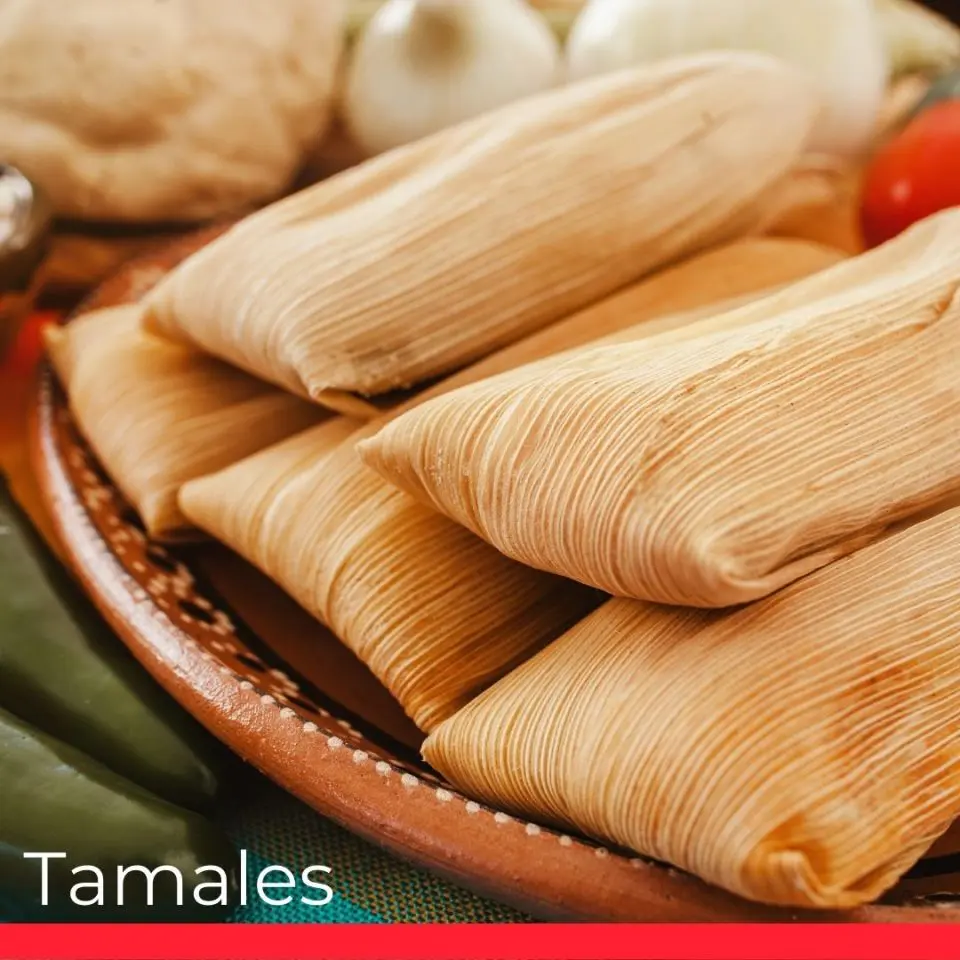
Across Central and the northern part of South America, tamales or (hallacas in Venezuela) are an iconic celebration food. Typically, they’re made of corn dough (masa) which is stuffed with a variety of fillings including chicken and pork, before being wrapped in a banana leaf or corn husk, and steamed to eat on the move.
There are many different recipes and each country/region will claim their tamale recipe is the best. So if you have the opportunity, go ahead and try as many as possible as they are certainly delicious.
For many Latinos living in the USA, tamales are also part of their heritage and synonymous with the Christmas holidays. They’re typically home-made with endless variations of the theme, and require the time and care that’s so often a characteristic of festive specialties.
Duck and Goose
Duck isn’t widely consumed at Christmas, but there’s one country where it’s adored, so we include it on our list! In Denmark – it’s estimated that three out of four people consume duck on the big day, and no Christmas dinner table is complete without it. It’s typically prepared with spices and includes plums and prunes.
Roast goose is a traditional Christmas dish in Central Europe. In Germany and Austria, while fish is eaten on Christmas Eve, the goose remains a popular choice on Christmas Day. It’s traditionally prepared by stuffing it with apples before roasting and served with potato dumplings and braised red cabbage.
Chicken
In Brazil, one of the most popular Christmas alternatives to turkey is a “chester“. This is a boneless, oval-shaped chicken package made from a special chicken breed that provides a high percentage of breast and thigh meat. Chesters are roasted and carved like boneless honey ham.
For a more traditional way to prepare chicken, Ethiopia’s Doro Wat is a superbly flavorful, fragrant, and rich slow-cooked stew that’s prepared for special occasions and family gatherings. For the Ethiopian Christian community, it’s traditionally served as part of a Christmas feast, poured over injera, soft Ethiopian bread.
Maltese home cooks traditionally reserved their fattest capon/rooster, the ‘hasi’, for Christmas lunch. Often too large for the household oven, it would be prepared in a casserole with the requisite potatoes and vegetables before being taken to the local bakery to roast.
Veal/Beef
Although pork or turkey are popular holiday dishes, one of Argentina’s most treasured Christmas dish is “vitel thoné“, while neighboring Uruguay also features beef cuts on its traditional Christmas asado.
Vitel thone is a delicious take on an iconic Italian recipe made with sliced veal and topped with a sauce of tuna and anchovies. Exclusively prepared as a Christmas treat, people look forward to it all year.
Vegetarian Alternatives
You may ask why we’d include vegetarian options in an article about traditional Christmas dinners. But with 16 million Americans, 29 million Brazilians, six million UK citizens, and an average of two million in each European country identifying as vegetarian, they’re a sizable minority.
Everyone should feel included at Christmas, so it’s worth mentioning a few iconic vegetarian main dishes – chickpea meatloaf, whole roasted cabbage with mushroom gravy, or a chili cheese sweet potato bake. They’re all delicious and definitely earn their place at a Christmas feast.
The best thing is that there are so many mouth-watering vegetarian recipes out there that even meat lovers will be delighted to join in!
So…. wishing you and your loved ones a joyful Christmas season! And plenty of fabulous food!