I created this dish some time back while browsing the fridge (to be honest I was giving the fridge the weekly clean and got hungry in the mean time).
I looked in the crisper drawer and found a couple heads of radicchio lettuce and asked myself ‘what can I do with these’.
I moved to the cheese drawer and found a little piece of neglected blue cheese; it had been over looked for the last few cheeseboards due to its small size, but this neglect had also meant it had aged nicely. ‘Blue cheese and radicchio, bitey and bitter’ I thought.
‘Better get something a little sweet to balance it a touch.’ I went to the pantry and pulled out a few handfuls of walnuts tossed them in a pan with some honey and cooked them until golden.
‘Getting somewhere now’ I thought, although the walnuts were coated in honey they still would have a slight inherent bitterness. Back to the fridge, there I found some Cabernet grapes; I de-seeded them and added them to the plan. I considered that maybe the whole dish was getting a little too sweet now and decided to throw in a few sprigs of peppery watercress to bring back the balance.
I still wasn’t sure what it would taste like but I was pretty certain that the flavors would work relatively well together. I tossed it all in a large mixing bowl and whipped up a dressing and served it up as my lunch, so much for cleaning the fridge.
Enjoy this gorgeous radicchio salad by Chef Paul Hegeman.
In a small saucepan reduce the balsamic over a medium flame until reduced by two thirds, allow to cool (this can be done in a larger quantity as reduced balsamic is always nice to have on hand).
Remove the outer leaves of the radicchio until you get to the deep red centre of the head.
Break up the red heart and tear it into uniform bite size pieces (remove the white spines by cutting a V in each leaf).
Toss the walnuts with the honey and place them in a non stick pan and cook over high heat, keep tossing the walnuts or they will burn.
Once golden remove them and spread out on a flat surface on baking paper and allow to cool.
In a small mixing bowl, mix the mustard with a good splash of olive oil and season with a little salt and pepper and whisk until combined.
Place lettuce, watercress and grape halves in a large mixing bowl and toss with a few tbsps of the dressing.
Arrange evenly on the 4 plates and garnish with crumbled cheese, walnuts and a drizzle of reduced balsamic.
Social media has come a long way: from simple platforms that allowed us to connect with each other to communities of influencers with millions of followers that drive trends across industries. Platforms such as Instagram and TikTok have also become drivers in the food industry, turning amateur cooks into veritable superstars who have their videos liked by millions across the world.
Since 2021, we have looked at Instagram to see which are the most popular and most hashtagged foods and cuisines in the world. In February that year, we reported that the hashtag #food was featured in a whopping 430 million Instagram posts. Two years later that number has reached 498 million, and it keeps climbing.
In our latest report for 2023, we have also included TikTok, which has emerged as one of the most popular platforms out there with more than 1 billion users. The short-form video social app has conquered the food space and countless recipe and food videos have gone viral and reached a massive audience way beyond the TikTok crowd.
How to read the chart labels: the popularity share associated with a cuisine represents the percentage of Instagram tags or TikTok shorts views relative to the total number of Instagram tags/TikTok views for the most popular 15 international cuisines (e.g. #Koreanfood-related shorts were responsible for 22.1% of the views for the top 15 international cuisines on TikTok).
There’s no denying the power and influence of social media on trends in the food and restaurant industries. But we’ve learned that what’s trending on one social media platform is not always popular on the other.
Korean food is the absolute all-time darling of the TikTok crowd, totaling 15 billion views. But while Korean cuisine takes the all time 4th most popular position on Instagram (and 5th over the past 12 months), it’s no match for Italian and Indian food popularity on that platform.
The most popular Instagram cuisines over the past 12 months
Whether you’re an amateur cook trying to get your recipes out there for the world to see, a well known chef highlighting innovative new techniques or an established restaurateur, you’ll want to be on Instagram.
This social media platform is all about visual appeal, so it’s the best way to showcase gorgeous dishes. However, since it introduced reels, Instagram has also become a great place to watch chefs and foodies in action and discover new dishes, or learn new recipes and cooking tricks.
#Food has been mentioned close to 500 million times on Instagram, so people’s appetites are high when it comes to scrolling food pics and reels online. But zooming in on specific cuisines, we see that the three top contenders grabbing everyone’s attention are the same each year, albeit in a different order: Italian, Indian, and Japanese.
Italian food topped 20.8 million hashtags in the past year – 16% more than the previous year
Italian is the ultimate comfort food, so it’s no surprise that it’s the most popular cuisine on Instagram. Just think about it: what do you crave when you’re stressed, having a bad day, or want to treat yourself? We think it’s likely that your answer will include either pizza, pasta, gelato, risotto, and other popular Italian foods. And what is more comforting and uplifting than a delicious Italian espresso?
Given that the world has had a rough few years, it’s easy to see why people gravitate towards their favorite comfort foods, and, as a result, #Italianfood has amassed 20.8 million hashtags over the past 12 months. That’s 2.9 million more hashtags than the previous year, which goes to show that there is absolutely no slowdown in popularity for Italian dishes – quite the contrary.
#Pizza is the third most popular food on Instagram, collecting 66 million total mentions on the platform, 9 million of which were in the past year alone. And don’t dismiss pasta, either; this dish was featured close to 5 million times in the past 12 months on Instagram, making it the 5th most popular dish on the platform.
Indian and Japanese follow close, both landing over 2 million hashtags in the past 12 months
In absolute numbers, Indian food is currently the second most popular cuisine on Instagram, with roughly 13 million hashtags as of March 2023. It was also the second most popular cuisine in the past 12 months, with 2.2 million new mentions on Instagram, following behind Italian food.
It’s easy to see why. Last year, we noted how Indian dishes were starting to compete with Italian on the platform due to their rich flavors, warmth, and complexity. A true festival of flavors and spices, Indian cuisine is incredibly popular across the globe, and as a bonus, most of it is also vegetarian-friendly and highly nutritious. The proof is in the numbers: #curry was mentioned in a total of 10 million posts on Instagram, and its popularity continues to grow.
But let’s not forget Japanese food, which reached a staggering 20.2 million hashtags on Instagram in 2023. The hashtag #Japanesefood also appeared 2.2 million times on the platform over the past 12 months, proving that its popularity is not dwindling, not even a little.
#Sushi alone has been featured in a total of 35 million Instagram posts, and was the 9th most popular food of the past year, with 3.2 million new mentions.
Greek, Jamaican, Turkish, and Lebanese cuisines are rising in popularity on Instagram
Besides the usual suspects such as Indian food, other cuisines have been climbing the most-popular ladder in 2023, at speed.
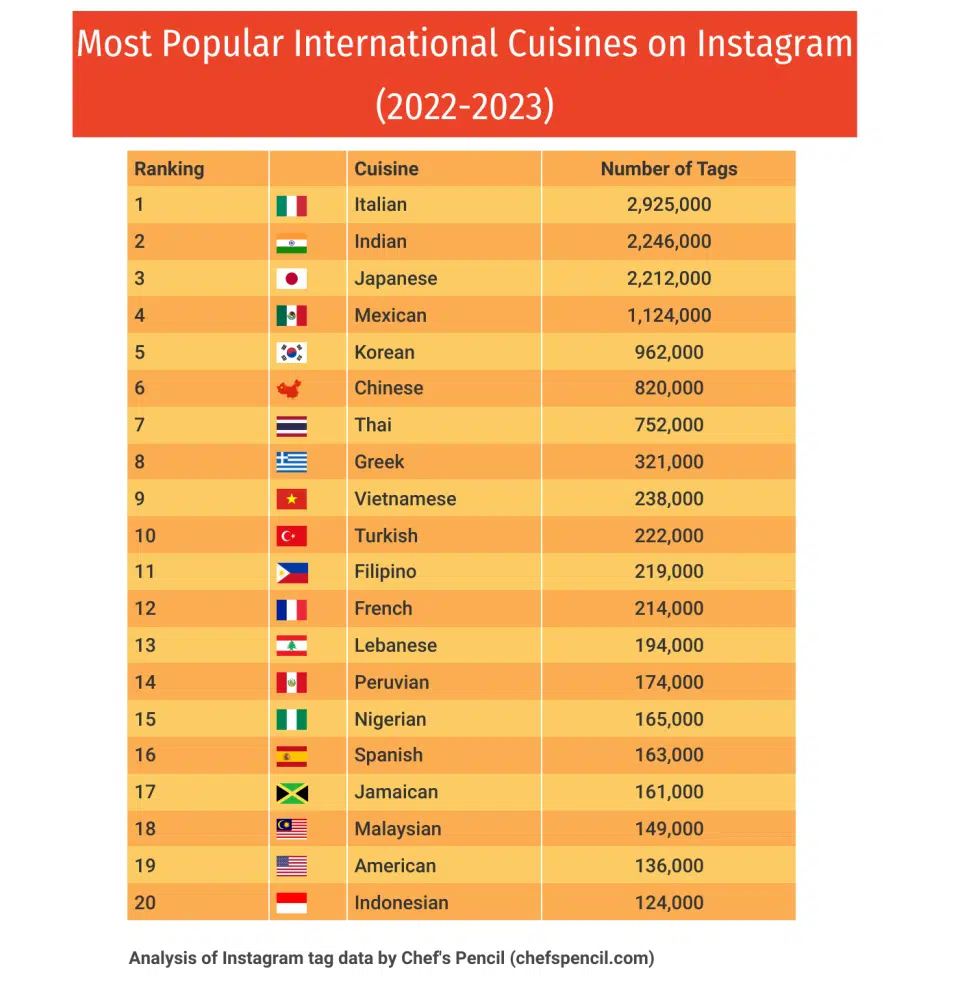
Greek food has enjoyed quite a surge in popularity over the past year, becoming the 8th most hashtagged international cuisine with 321,000 new mentions – a 17% growth compared to the previous year.
Greek cuisine is the quintessential Mediterranean diet, a diet that has been repeatedly ranked the best in the world. Not only is Greek food healthy, but it’s also visually appealing and incredibly delicious. The record number of tourists that Greece enjoyed in 2022 have most certainly also contributed to the increased popularity of the local cuisine.
Lebanese food is another cuisine which is rising fast in popularity on Instagram, with 194,000 mentions in the past 12 months – 18% more than the previous year. This growth makes it the cuisine with the second fastest growth on Instagram in 2023 and 13th most popular cuisine of the past year, trailing right behind French food.
If you haven’t yet tried Lebanese food, please head to the nearest Lebanese restaurant as the food is simply amazing.
#Jamaicanfood continues its fantastic story on Instagram. Last year, Jamaican was the cuisine with the second highest growth rate on Instagram and it continues to share the podium in 2023. Not a small feat for this Caribbean cuisine that doesn’t have the huge cultural weight nor the diaspora of Italy, India or China.
Other cuisines that are becoming more popular on Instagram include #Turkishfood, with 222,000 new mentions in the past year, #Americanfood, featured in 127,000 new posts, or Colombian food.
The Most Popular Cuisines on TikTok
Now that we’ve looked at what foods people are interested in when scrolling on Instagram, it’s time to move on to another incredibly popular platform for foodies: TikTok.
The short-form video platform was created in 2017, and in a short time has grown to be one of the most popular social media platforms in the world. With 672 million downloads in 2022 and roughly 1 billion users, TikTok is clearly the place to be for food lovers.
Comparing the rankings to Instagram, there are some key similarities and some interesting differences. Given that TikTok is owned by the Chinese company ByteDance, and with a big chunk of its active users based in China, it’s no surprise that Chinese food is incredibly popular on the platform.
The #Chinesefood hashtag has collected more than 13 billion views in the past year, making Chinese one of the top most popular cuisines on TikTok. But it’s not the most popular.
From K-pop and K-drama to K-food and TikTok stardom
The top spot in our ranking of the most popular cuisines on TikTok is reserved for Korean food. With a staggering total of 15 billion views on the platform, #Koreanfood is the clear winner.
Italian, Japanese, and Indian, the top cuisines on Instagram, don’t even come close in popularity on TikTok. Dishes such as bibimbap and kimchi have been making the rounds on TikTok – more than pizza, pasta, or sushi. But why are the rankings so different, and why is Korean food so massively popular on TikTok?
It might have something to do with the rise of Korean culture in the media in recent years. From K-pop music like BTS to insane Netflix hits like Squid Game, Korean culture has been taking over the internet, a phenomenon that some like to call Hallyu, or ‘the Korean wave.’
Whenever parts of a certain culture start to gain popularity online, the food culture is soon to follow, and that’s exactly what’s been happening with Korean food on TikTok. Korean dishes are inserting themselves into our vocabularies, and Korean chefs are getting the recognition they deserve – and social media has definitely played a part in all that.
The differences in age demographics between the two platforms could explain the differences. TikTok is primarily favored by Gen Zs, a younger generation that’s been more heavily exposed to the Korean cultural exports.
Coming up third to Korean and Chinese food in popularity on TikTok is Mexican food. It’s not a huge surprise, given that Mexican food is the most popular ethnic cuisine in most American states, and next to China, the US is the country with the highest number of TikTok users.
Mexican food is followed closely by Indian food, which boasts 7.4 billion views, and Italian, with 7.1 billion views. The top 10 is rounded out by Japanese, Thai, Filipino, Vietnamese, and African food.
Methodology
Chef’s Pencil analyzed Instagram data from February 2022 through March 2023. The number of tags reported are rounded down to the nearest thousand. Instagram rankings are based on the number of tags from the prior 12 months.
TikTok rankings are based on the number of all-time views reported on the platform in March 2023.
How to read the chart labels: the popularity share score associated with a cuisine represents the percentage of Instagram tags or TikTok shorts views relative to the total number of Instagram tags/TikTok views for the most popular 15 international cuisines (e.g. the 22.1% of views for the top 15 international cuisines on TikTok were for #Koreanfood-related shorts).
Fair Use and Redistribution
Chef’s Pencil grants you permission to reuse, host, or repost the graphics and images from this article. When doing so, we ask that you kindly attribute the authors by linking to Chef’s Pencil or this page.
Salade niçoise, is originally from Nice (like the ratatouille), but it has become a staple French dish and is consumed throughout the country. A very colorful dish, it is famous for including tuna steak or anchovies, along with tomatoes, hard boiled eggs, onions, black olives, and a few greens that vary depending on the season.
When making this salad you are likely to find as many variations as ingredients. The important thing to remember is it is made by you for you and your friends, so if you’re not a fan of certain ingredients leave them out, likewise if you really love a certain item, add a little more.
The salad Niçoise recipe below is our collective favorite here at Chef’s Pencil. However if we were true to the salads namesake (i.e. from Nice in France) there would definitely not be any potatoes in this salad.
Enjoy this superb salad Niçoise recipe with potatoes by Chef Paul Hegeman.
Peel the garlic cloves and cut in half lengthwise and add to about 400 ml (14 oz) extra virgin olive oil (let marinate at least a few hours).
Combine in a mixing bow 2 tsp dijon mustard, capers, thyme, approx 80 ml (3 oz) of white wine vinegar, 80 ml (3 oz) of garlic infused extra virgin olive oil and season with sea salt and fresh cracked pepper. Whisk ingredients together and set aside.
Salad:
Place potatoes in a med sized pot, cover potatoes with cold salted water and bring to the boil allow to boil for about 3-5 minutes, strain and set aside.
Cut each tomato quarter into 4.
Place the tomato, cucumber, capsicum, beans, onion, olives and basil leaves in large bowl.
In a non-stick fry pan place a few tbsps of olive oil and fry potatoes until golden on all sides, season with sea salt and cracked pepper, add to the other vegetables in bowl.
If using the tinned tuna: add the drained tuna to the bowl as well and break into large chunks.
To poach eggs place 6 cups of water with 1tbsp vinegar in a saucepan and bring to the boil. Once boiling remove from the heat and add eggs one at a time, and return to the heat. Remove eggs from the heat when the whites are fully cooked but the yolks are still soft to the touch, drain off excess water and set aside.
If using the fresh tuna: wipe the potato pan clean and sear the tuna in some olive oil in the pan (approx 1 minute for very beautifully rare, do this while the eggs poach).
Drizzle the contents of the bowl with some of the prepared dressing.
Place tossed salad onto plates, top with seared tuna steaks and then top with still warm poached eggs and 2 anchovies each, make a slight incision in each yolk allowing yolk to start running and serve immediately with some crusty French baguettes.
(The above presentation can be altered for a more rustic look by cutting the tuna into cubes before searing and tossing it with the salad).
Greece is not known only for the gorgeous beaches and picturesque islands of a dream summer vacation. Apart from the vast and rich history, the traditions and heritage that give the land its unique identity, Greece is also known for its top-quality olives and olive oil.
So much so, that the oil is often called Greece’s liquid gold.
There are around 60 varieties of olive in Greece. Of those, the Kalamata is considered the queen. The olive oil from Kalamata olives is also considered the finest Greek olive oil, which makes both extremely popular within Greece and beyond. As does so much in Greece, Kalamata olives and olive oil have a rich history and tradition intertwined with everything from their production to their consumption.
Read on to find out everything you should know about Kalamata olives, olive oil, and the incredible facts surrounding both!
All About Kalamata Olives
Kalamata olives are DOP (Protected Designation of Origin) so only those from the region of Kalamata in the Peloponnese can be called “Kalamata” olives. All other similar variants, from trees of the same variety as those in Kalamata, are called “Calamon” olives.
Though categorized as a black olive, Kalamata olives are actually a lush, rich deep purple. They are quite large in size and almond-shaped. They are also more tapered in their elongated shape than other varieties of black olive, which often are round. They are grown only in the region of Kalamata, which is a coastal city near Sparta, surrounded by the fertile land of Messinia.
The taste of Kalamata olives is a unique blend of fruity and savory, with a richness and light, fragrant aftertaste that is iconic and slightly reminiscent of wine. That’s why, unlike other black olives that vary in flavor due to herbs added while they are brined, Kalamata olives always have their own distinct taste.
Because of their size and special fleshy nature, Kalamata olives are usually hand-picked to avoid them bruising. This is a risk because unlike other olive varieties, Kalamata olives are picked from the tree only once they are fully ripe. The best season for olive picking is late October.
As with most olives, when first picked Kalamata olives are too bitter to consume. They require a special process to remove the bitterness and bring out their iconic taste. This is called “hardening” and there are two ways this is done.
The shortcut way requires brining the olives for a week, then washing them, and packing them with olive oil, lemon wedges, wine vinegar, and brine. This method increases the amount of sodium in the olives, so keep that in mind if you have to be mindful of your sodium intake.
The long way requires each olive to be sliced along the side with a sharp knife, then soaking them in a salt and vinegar solution of about 10% concentration. Every two days or so, the solution is replaced with a new batch for at least a week, though this could take longer.
The olives are tasted periodically to see if the bitterness has lifted. Once that happens, they are packed with a new, final batch of salt solution, a thin layer of olive oil on top to keep the olives immersed, and a sprig of dried oregano. This process can take up to three months, but it leaves the olives with a lot less sodium and all the taste!
Kalamata olive oil is made from Kalamata olives known as Koroneikes, from an olive tree variety used only for making olive oil.
They are picked when unripe and still green and the oil needs to be extracted within 24 hours to retain the fruity, fragrant flavor that Kalamata olive oil is known for. The oil is so iconic that it enjoys DOP status, just like the olives themselves. Kalamata olive oil is considered one of the best in the world.
Kalamata olive oil is always extra virgin (EVOO), made using traditional methods (cold-pressed), and traceable to the region of its origin, in the Peloponnese.
Health benefits of Kalamata olives and olive oil
Kalamata olives are known for a wide range of health benefits. They are rich in antioxidants, which can protect your health in various ways. Studies have been done regarding the benefits of Kalamata olives, and while more research is needed to confirm the findings, there is a strong indication that they have the following significant benefits.
Reduced risk of heart disease and strokes: The olives contain hydroxytyrosol, which is an antioxidant that specifically limits the production of “bad” cholesterol or LDL. Instead, it boosts “good” cholesterol production or HDL. High levels of HDL have been associated with reduced risks of cardiovascular disease. The same function happens for the risk of stroke, thanks to the same antioxidant.
Reduced risk of cancer: Alongside the antioxidants hydroxytyrosol and oleuropein, Kalamata olives contain oleic acid, which is associated with a reduced risk of a wide variety of cancers, from breast cancer to colon cancer.
Reduced risk of Alzheimer: Gallic acid is also contained in the olives, which is associated with helping nerve cells to repair themselves. This nerve reparation can help reduce the risk of Alzheimer’s disease, which is a degenerative disease of the nerves.
Helps with regulation in Type 2 Diabetes: The antioxidants, together with the monounsaturated fats that the Kalamata olives have in high concentrations help regulate and control blood sugar levels and even weight loss for people with Type 2 diabetes.
Antimicrobial and antiviral effects: The antioxidants contained in the olives also make it more resistant to infection, including herpes and rotavirus.
The cultural significance of olive oil in Greece
For Greece in general, olive oil is more than just the staple of the Mediterranean diet and Greek cuisine. It is part of the cultural heritage and identity. There is archaeological evidence that olive trees and their systematic cultivation has been ongoing uninterruptedly for several millennia. As early as Neolithic times, and definitely by the rise of the Minoan civilization, olives and olive oil were central in the dietary habits of the region.
The value of olive oil and olives is also found in ancient Greek myths, such as the myth of how Athens got its name: in a contest between Athena and Poseidon for who would lend their name to the city, Athena won because she gifted the Athenians the olive tree as opposed to Poseidon’s water spring. During the Olympic Games in antiquity, oil was used to coat the bodies of the athletes, and olive tree branches to crown the winners.
In modern Greece, this intensely spiritual link with olive oil carries on in the practices of the Greek Orthodox church, where olive oil is used to anoint during christenings and other rituals. Olive oil is considered a prime ingredient for several extremely popular Greek dishes, and often it is consumed raw for its health benefits. The Peloponnese, where Kalamata olives come from, is considered the heart of olive oil and olive production, where the best of the best has been made since the time of Greek legends.
Kalamata olive oil brands
The best of Kalamata oil comes directly from the source, so if you ever find yourself in the area, make sure to look up local small farm producers as there are many. But that isn’t feasible for everyone, so what are the best labels that bring you Kalamata olive oil no matter where you live?
The best Kalamata olive oil is always the extra virgin oil from the Koroneiki variety. Here are a few labels that have earned international acclaim and are as good as having access to that very grove in Kalamata.
Laconiko: Easily one of the most acclaimed Koroneiko olive oil brands, with certifications for its beneficial elements such as polyphenols and other antioxidants. Like all top quality premium Koroneiko olive oil brands, the oil making process is done the traditional way.
Vatsiko: Also coming with prestigious awards for its quality, Vatsiko boasts its PDO accreditation and its traditional methods producing some of the best quality extra virgin Koroneiko olive oil.
Argali: Argali Messinia is a label with many prestigious awards and certifications, just like the rest on this list! It’s 100% Koroneiko extra virgin and comes directly from the grove in the Peloponnese to your table.
Terra Creta Grand Cru: Though this internationally awarded Koroneiko olive oil isn’t produced in Messinia, it is 100% made from Koroneiko olives from trees in another region of Greece renowned for its top-quality olive oil: Crete.
What is the best way to have Kalamata olives and olive oil?
Over the centuries, Greeks have come up with several ways of enjoying this produce, but the basics are remarkably simple. Perhaps because when something is already rich in flavor and texture, you don’t need to cook it much!
Here are some of the most popular and easy ways to eat Kalamata olives and olive oil, the two often going together.
Often in Greek restaurants you will be served a cup of Kalamata olive oil with some oregano, Kalamata olives, and freshly baked bread. Dipping the bread in the olive oil has been traditionally considered a treat and it allows you to fully appreciate the flavor of the oil.
Kalamata olive oil is the perfect dressing for almost any kind of salad! It is especially great, however, with the iconic Horiatiki or Greek salad: cucumber, tomato, onion, Kalamata olives, a hefty slice of feta cheese, and a generous drizzle of Kalamata olive oil make for one of the healthiest salads out there! Make sure to use your bread to mop up the extremely tasty juices from the tomato and olive oil!
Beyond the Horiatiki salad, any salad with lettuce, wild greens or other vegetables is bound to be enhanced with Kalamata olive oil.
Kalamata olive oil mixed with lemon juice, vinegar, salt, oregano, or other herbs can make a great marinade for meats and fish before baking, grilling, or roasting.
Traditionally in Greece, an olive oil and lemon dressing is used for large grilled fish such as pandoras or trout. The same goes for shellfish such as lobsters and shrimp.
For vegetarians or vegans, Kalamata olive oil is perfect drizzled over vegetables or cheese before roasting or grilling!
Least but not last, the best tapenade, a Mediterranean olive-based dip, is made with Kalamata olive oils. Kalamata olives are also a great addition to a flavorful caponata or a Nicoise salad.
Kalamata olives and olive oil are a flavorful, healthy addition to your kitchen. They will enhance your salads, your roasts, and any other dish you cook with them, giving them a unique, fragrant boost without burdening your health. That’s why Kalamata oil is Greece’s liquid gold and why the Kalamata olives are considered the queen of all varieties. Make sure to look out for them!
As an archipelago with different regions, the Philippines offers a wide variety of specialty desserts made primarily of rice, coconut, and fruits that are widespread in this tropical country.
With agriculture being their primary source of livelihood, rice has been a staple food of the Philippines. Because of this, rice is not only eaten with savory dishes but is also an ingredient in many Filipino desserts. Certain desserts use rice flour, while others call for glutinous or sticky rice.
The Filipino’s ingenuity with desserts can be traced back to the nation’s history with sugar, an essential product in its colonial economy. Filipinos use sugar in everything, so it’s not surprising that they have many sweet delicacies. When you visit the Philippines, don’t forget to explore this luscious part of their gastronomy. Here are fifteen of the best known, to help you get started!
Filipino deserts
Merienda Time
Desserts are usually served right after lunch or dinner, but Filipinos are known for not adhering to standard mealtimes (breakfast, lunch, and dinner). Instead, they have what they call “merienda” in the morning and the mid-afternoon.
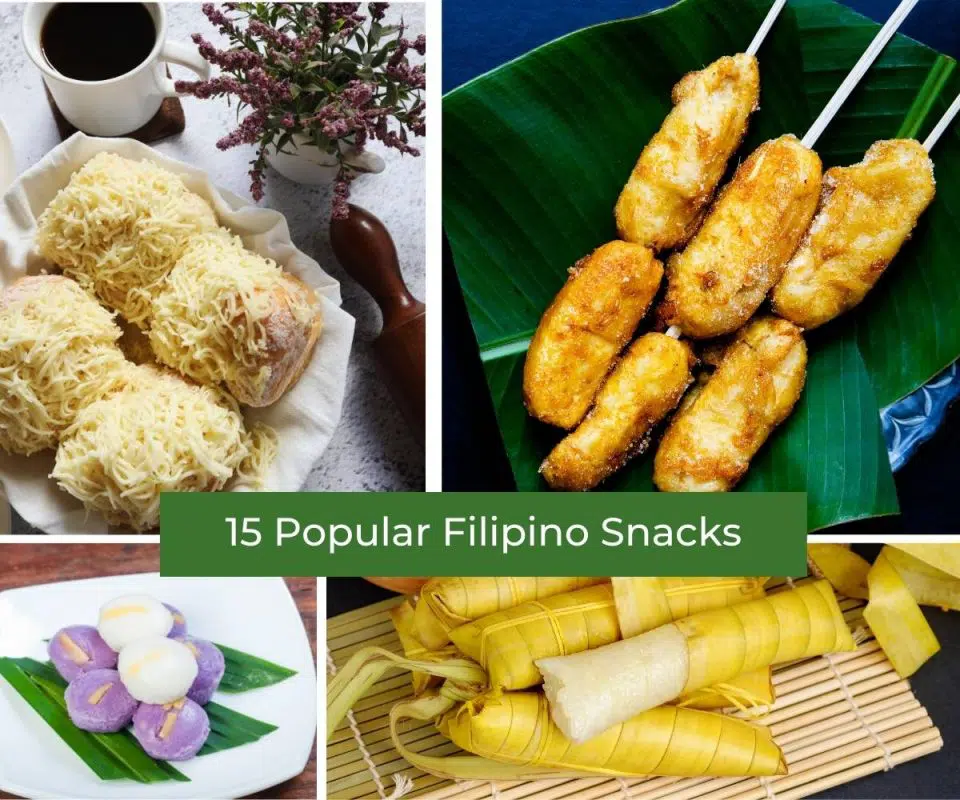
Merienda is a light meal or snack that can be savory or sweet. Filipinos are easygoing regarding the time a particular food can be eaten. Therefore, a merienda can be anything: noodles, rice porridge, banana fritters, camote fritters, pancakes, burgers, pastries, and most especially, desserts.
1. Halo Halo
Halo Halo desserts
Halo-halo which translates to “mix-mix,” is the quintessential Philippine dessert and the most popular merienda for Filipinos, particularly during the summer. The preparation of Halo-halo varies depending on personal preference, but the key ingredients are shaved ice, milk, and an
assortment of toppings from sweetened beans to seasoned fruits.
Some commonly added ingredients are macapuno, red beans, jackfruit, and nata de coco. Halo-halo is served with a generous amount of Leche Flan on top. As its name suggests, you only have to mix all ingredients to enjoy this refreshing dessert.
Leche Flan is one of the most beloved and popular desserts in the Philippines with an original recipe dating back hundreds of years.
The word “leche” means milk in Spanish, and leche flan is a local term derived from the original Spanish leche de flan, which means milk flan. Fun fact: egg whites were used in the building of churches during the Spanish colonial era, and the egg yolks leftover were not wasted.
Instead, they were used to create leche flan, which resembles crème caramel. However, in the Philippines leche flan is a much heavier version of the original recipe, using more egg yolks and condensed milk.
This special treat is served on all special occasions. It is a simple yet decadent dessert with topping of luscious caramel. It melts in your mouth and has a rich, silky, smooth and creamy custard texture.
This special treat is served on all special occasions. It is a simple yet decadent dessert with a luscious caramel on top. It melts in your mouth and has a rich, silky, smooth and creamy custard texture.
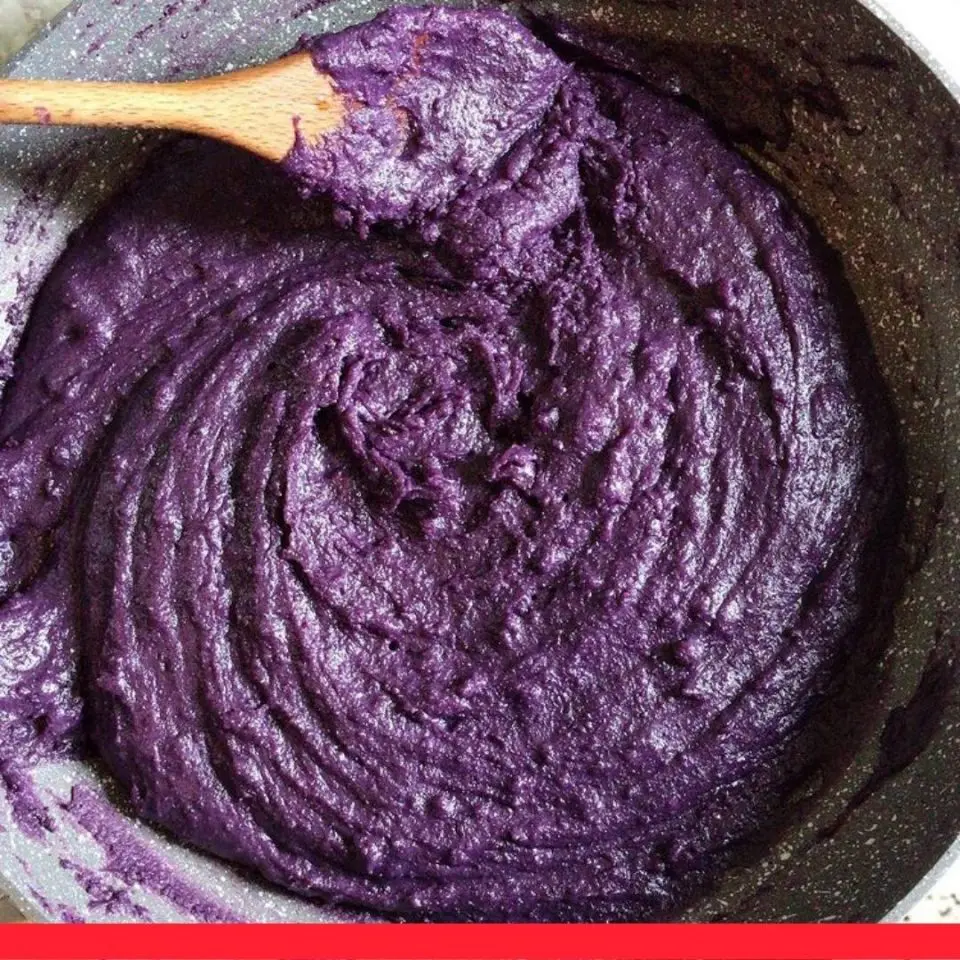
Ube Halaya, distinguished by its vibrant purple color, is a unique dessert primarily associated with Filipinos internationally.
The name is derived from the Indian words ‘ube’ (pronounced oo-be), meaning purple yam, and ‘halaya’ meaning jelly or mash. Ube Halaya is a sweet, smooth-textured pudding that can be eaten as a snack, with desserts, or used to flavor/color ice cream and cakes.
Although there are many ways of using ube for delicious recipes, the preparation and cooking of Ube Halaya are pretty straightforward. The ube is peeled, boiled, grated, and mashed, then sweetened with condensed milk or sweetened coconut milk before being placed in a saucepan with melted butter. The mixture is stirred vigorously until thickened when it is left to cool. Ube Halaya is typically refrigerated and served cold.
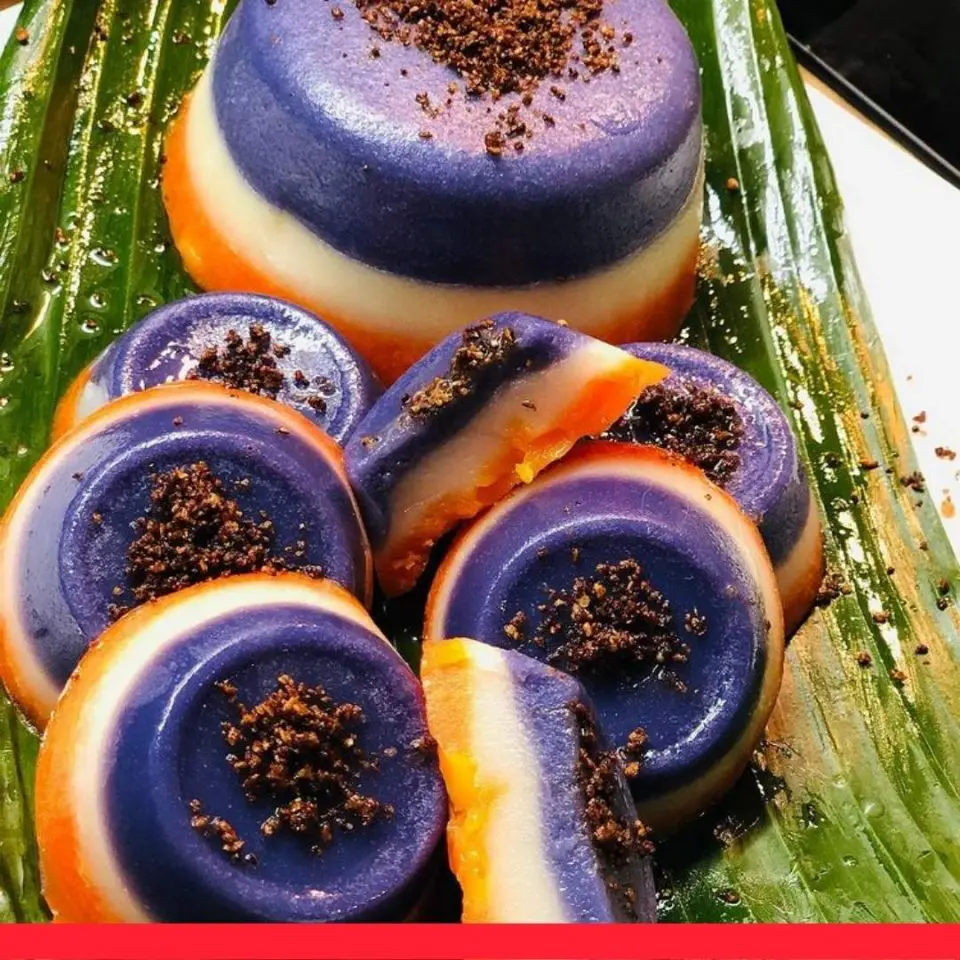
This festive and colorful dish has a dense, chewy, pudding-like texture and is typically served at social gatherings or celebrations as it’s very time-consuming to prepare. It is made with galapong (glutinous rice dough), coconut milk, sugar, condensed milk, and an occasional ube or jackfruit flavoring.
The process starts with making the sticky rice dough from scratch, extracting the coconut milk, and cooking ube halaya, one of its many layers. This process usually takes a whole day. Then, it is typically served with latik or toasted coconut curd. It is visually appealing and typically has three layers; purple, yellow, and white.
Mais con Yelo (corn with ice) is a refreshing cold dessert made with sweet corn, shaved ice, milk, and sugar. Traditionally, it is made with crushed or shaved ice drizzled with a sweet, milky mixture. It is served plain or topped with toasted rice krispies, crushed corn flakes, or ice cream.
If you get the opportunity to visit the Philippines, you’ll find this deliciously sweet snack sold by many street vendors in both urban and rural areas. Since the ingredients are cheap and plentiful, it’s one of the most accessible treats in the Philippines.
Turon is a deep-fried banana, wrapped in a spring roll wrapper and deep-fried, then typically coated with caramelized sugar. Slices of jackfruit sometimes accompany the banana as a filling, and it is served warm – with a drizzle of caramel to make it extra sweet and yummy.
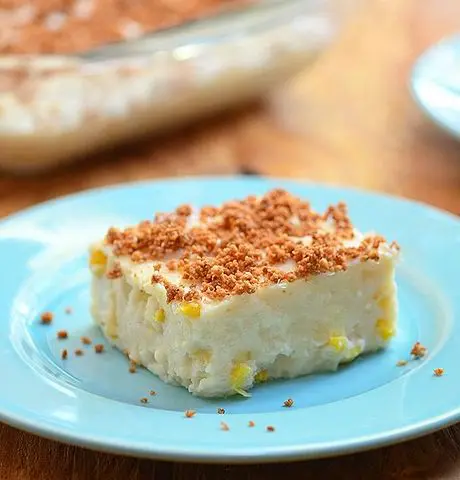
Literally translated as “white delicacy,” Maja Blanca is a dish of Spanish origin that has become a very popular Filipino dessert that can be found at almost any festivity.
It is basically a coconut milk pudding thickened with cornstarch. Maja has the consistency of thick gelatin and has a delicate flavor, is creamy white, and has a soft, smooth, and creamy texture.
Maja blanca is easy to prepare, and the ingredients are available everywhere. The only thing you need to remember is to ensure that the coconut milk has enough time to cook. The other components must also be mixed until the texture becomes smooth, and the sweet corn is also cooked longer than usual to give time for its flavor to combine with the coconut milk.
The Chinese introduced the idea that round and starchy desserts symbolize wealth sticking to anyone who consumes them.
How did this dish get its name? Ginataang bilo-bilo means “rice balls cooked in sweetened coconut milk.” Bilo-bilo comes from the sound of the sticky rice balls as they boil away on a stove.
Ginataang bilo-bilo is a mixture of diced root vegetables (such as sweet potato or ube), bananas, and chewy rice balls. They’re all cooked together into a soupy porridge thickened with coconut milk. Sometimes, sliced langka or jackfruit is added to give the dish a tart kick.
The Philippines is one of the leading global exporters of bananas. Because of their widespread availability, Filipinos enjoy different varieties of this fruit – each has unique characteristics.
However, only the Saba variety is used to make sweetened bananas or Minatamis na Saging, which is more of a beloved homemade treat than a restaurant delicacy. Filipinos regularly make this dish at home as it’s one of the simplest desserts you can make.
It’s prepared by boiling three ingredients: bananas, brown sugar, and water. Vanilla extract is sometimes added to enhance the flavor. After the bananas have absorbed the sugar and water, this dessert is served as it is or with shaved ice and tapioca pearls.
Silvanas are delectable crunchy and creamy frozen cookies. A layer of silky buttercream is sandwiched between two cashew-meringue wafers coated with cookie crumbs. They are best described as the cookie version of a Sans Rival, another popular classic Filipino dessert.
Although they look a little like French macaroons, the resemblance ends there as the flavor and texture are completely different. Silvanas are traditionally made in the southern part of the country and are not usually made at home because of the intricate process involved in making them.
Buko Pie is one of the most well-known delicacies in the Philippines. It originated in the province of Laguna, which even today is acknowledged as the home of the finest “Buko” (coconut) pies in the Philippines.
Buko Pie is a pastry filled with soft young coconut and is usually seen in stores along the highways, on street side stalls, and even being sold by walking vendors.
Buko pie is what Filipinos call a type of pasalubong — a Tagalog phrase meaning “bring something home for me,” which refers to the tradition of bringing souvenirs, often food, back home after a trip.
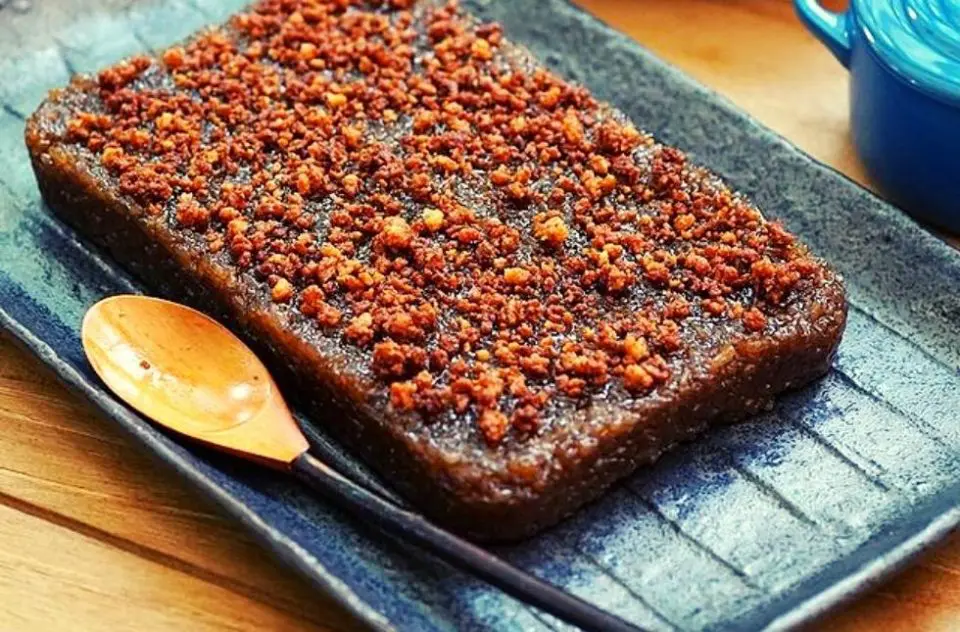
Biko is a luscious rice cake often served at parties, weddings, and funerals. It is made with glutinous rice, coconut milk, and a bittersweet coconut curd topping. This intriguing dessert is gooey and sticky, with a distinct, nutty sweetness.
Compared to other rice cake recipes, Biko needs a bit of patience to prepare. Before baking, the rice has to be constantly stirred for around 20 minutes to prevent it from sticking to the pot. While baking, the top layer is prepared, then poured on top, and the mixture goes back in the oven to finish.
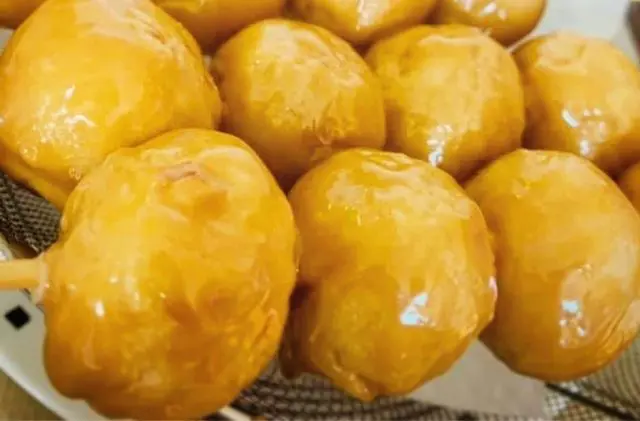
Cariocas are delicious sticky fried rice balls with coconut caramel sauce. These can be considered street food since Carioca vendors are a common sight on the streets of Manila, where they’re usually served on bamboo skewers.
Cariocas are similar to beignets, the fried dough goodies from Louisiana. However, this quintessential Filipino delicacy is made of sweet rice flour (glutinous rice flour can also be used), and sweetened shredded coconut to be enjoyed as a dessert or snack.
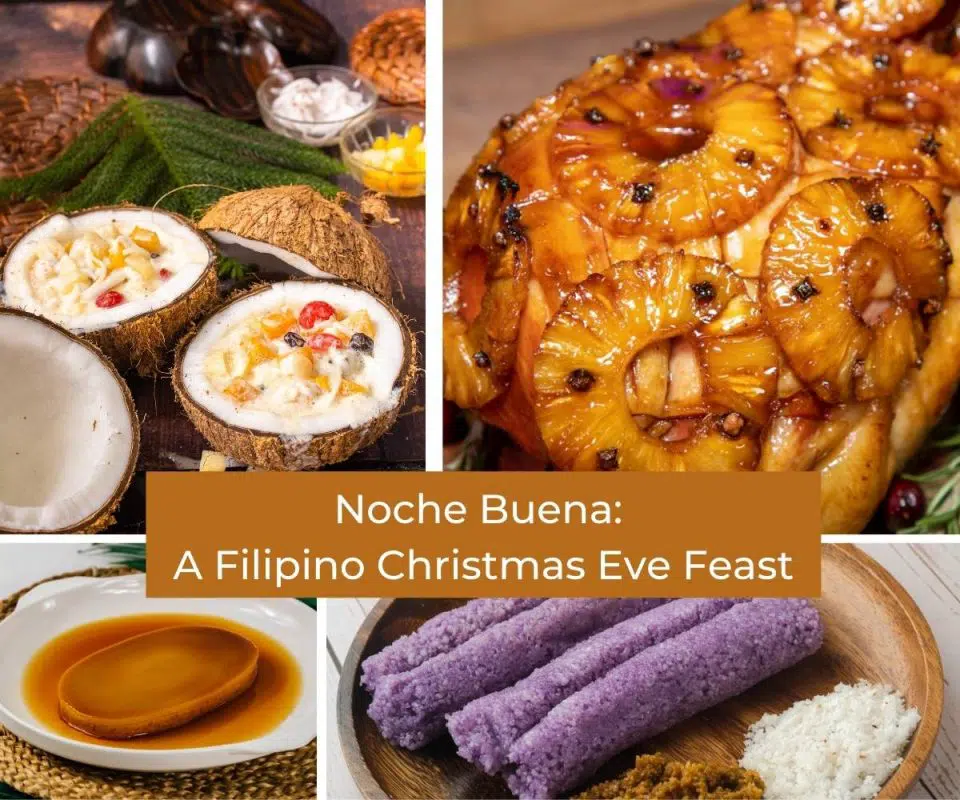
Given the fantastic range of luscious fruits available, it’s no surprise that Filipino fruit salad is a traditional and staple dessert at most Filipino parties, especially during the holidays.
Fruit Salad is a dessert consisting of various local and seasonal fruit mixed with table cream and condensed milk. It couldn’t be easier to make and requires no cooking – so if you’re looking for something quick to make and packed with health-giving nutrients, you’ve got it!
Heavy cream and condensed milk can both be used to add texture and hold the ingredients together. Some people mix in diced cheese and apples for a more original version with added crunch.
Buko Pandan is a traditional crowd-pleaser at any Filipino gathering. It’s a sweet and refreshing traditional dessert made of coconut, pandan-infused gelatine/jelly, and sweetened cream.
Pandan is flowery, fragrant, coconut-y, and banana-y all at once- genuinely tropical and delicious.
Preparing is also straightforward – mix all the ingredients and chill.