Monday, April 10, 2023

Haitian Food: 20 Best Dishes to Try in Haiti

The nation of Haiti is located on the island of Hispañola, side by side with the Dominican Republic. It is known not only as the world’s first black republic but also for its beautiful beaches, culture, and cuisine.

Haitian cuisine is a fascinating blend of many culinary influences – a distinctive fusion of French, Spanish, African, Arabic, Taino, and American dishes.

Like other Caribbean islands, Haitian cooks have developed unique cooking techniques and use the freshest local ingredients to create unique, delicious, and simply unforgettable traditional dishes. 

If you’re looking forward to sampling a range of exotic, mouth-watering treats on your next trip, we’ve listed 20 typical Haitian dishes every traveler should experience when discovering this incredible Caribbean island.

1. Soup Joumou

Soup Joumou

Soup joumou is placed #1 on our list because it symbolizes freedom for Haitians. In 2021 it was also added to UNESCO’s Intangible Cultural Heritage list of global treasures. 

This soup, made with squash purée, beef, potatoes, and vegetables, is traditionally served on New Year’s Day to celebrate Haiti’s hard-fought independence from France.

It was once the exclusive delicacy of the white masters, while the enslaved people who prepared it were forbidden to eat it. But since January 1st, 1804 – the day Haitian revolutionary leader Jean-Jacques Dessalines declared Haiti’s independence – joumou has become a symbol of freedom that graces every Haitian’s table on New Year’s Day. 

At home, with family and friends, everyone hopes to enjoy a bowl of soup joumou on that day – a culinary event and celebration of freedom that’s not to be missed.

2. Kremas

Kremas
Photo Credit: clairinthespiritofhaiti

Haitian kremas is an emblematic alcoholic drink served on special occasions in Haiti. It’s a luscious cocktail of coconut milk, unsweetened condensed milk, sweetened condensed milk, spices, and rum.

Together, they create a sweet, smooth, and creamy texture, and a small glass is enough to make your taste buds explode with pleasure. During the Christmas holidays, kremas is a must-have drink, but be cautious – it’s so delicious that it’s tempting to keep on drinking. But all that alcohol will shock you when you try to stand up!

3. Fritay

Fritay
Photo Credit: the_taste_journey

Fritays are small pieces of pork, marinated and then grilled (griots), and served with a hot sauce and fried plantains. They are the favorite meal of Haitians in a hurry and are sold all over the country by roadside chefs with cooking equipment installed under a makeshift hut. 

At first, you may be wary of trying them, once you’ve taken the plunge and tasted a sample, you’ll be delighted that you have and likely be back for more!

4. Legim

Legim
Photo Credit: neguesscreolenj

Legim is among the most popular Haitian vegetable stews. It is made from a wide variety of vegetables, including green beans, watercress, chayote squash, carrots, cabbage – the list goes on, and every Haitian cook has their unique take on the basics.

5. Pikliz

Pikliz
Photo Credit: ton_quartier

According to some, pikliz takes its name from the English word pickles. This makes sense, as pickles everywhere are a mixture of raw vegetables macerated in vinegar – just like the Haitian pikliz. Pikliz is hands-down every Haitian’s favorite condiment. If you try it, you’ll notice that no matter how much pickliz you devour, there is rarely enough.

This crunchy blend of cabbage and carrots makes this condiment the perfect side dish. It makes an ideal partner for all kinds of fried dishes such as griot, fried chicken, weighed banana, etc, as the acidity of the pickliz balances the rich fattiness of the fried food.

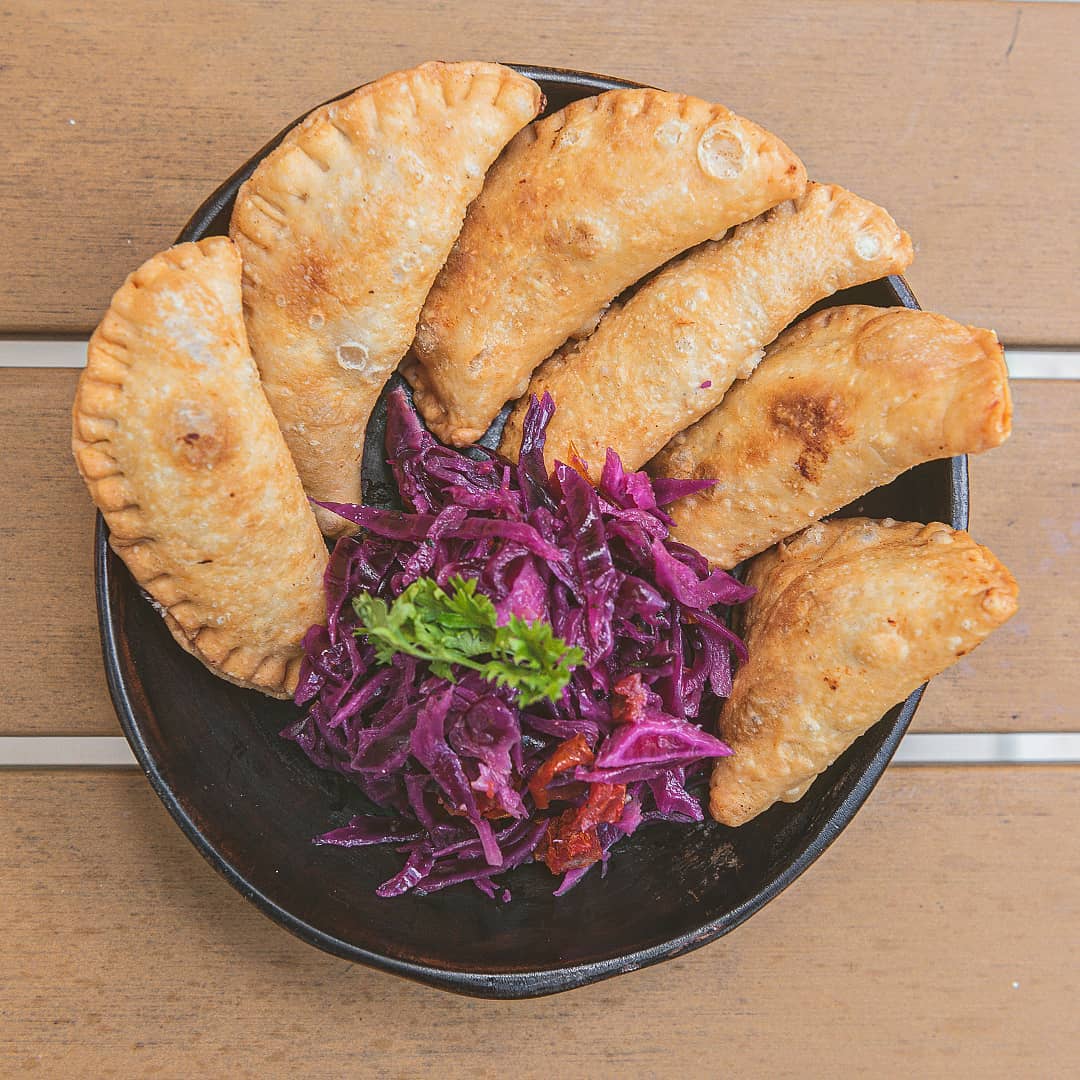
6. Pate Kòde (Haitian Patties)
Pate Kòde
Photo Credit: haitifoodtography

This might be your new favorite if you’re looking for a new comfort food. Pate kode are delicious and you’ll have plenty of choice of fillings, such as hot dogs and eggs, smoked herring and eggs, chicken and cabbage, etc.

The possibilities are endless when stuffing these patties, you can literally put whatever you want in them and they’ll still taste good!

7. Haitian’s Russian Salad
Haitian’s Russian Salad

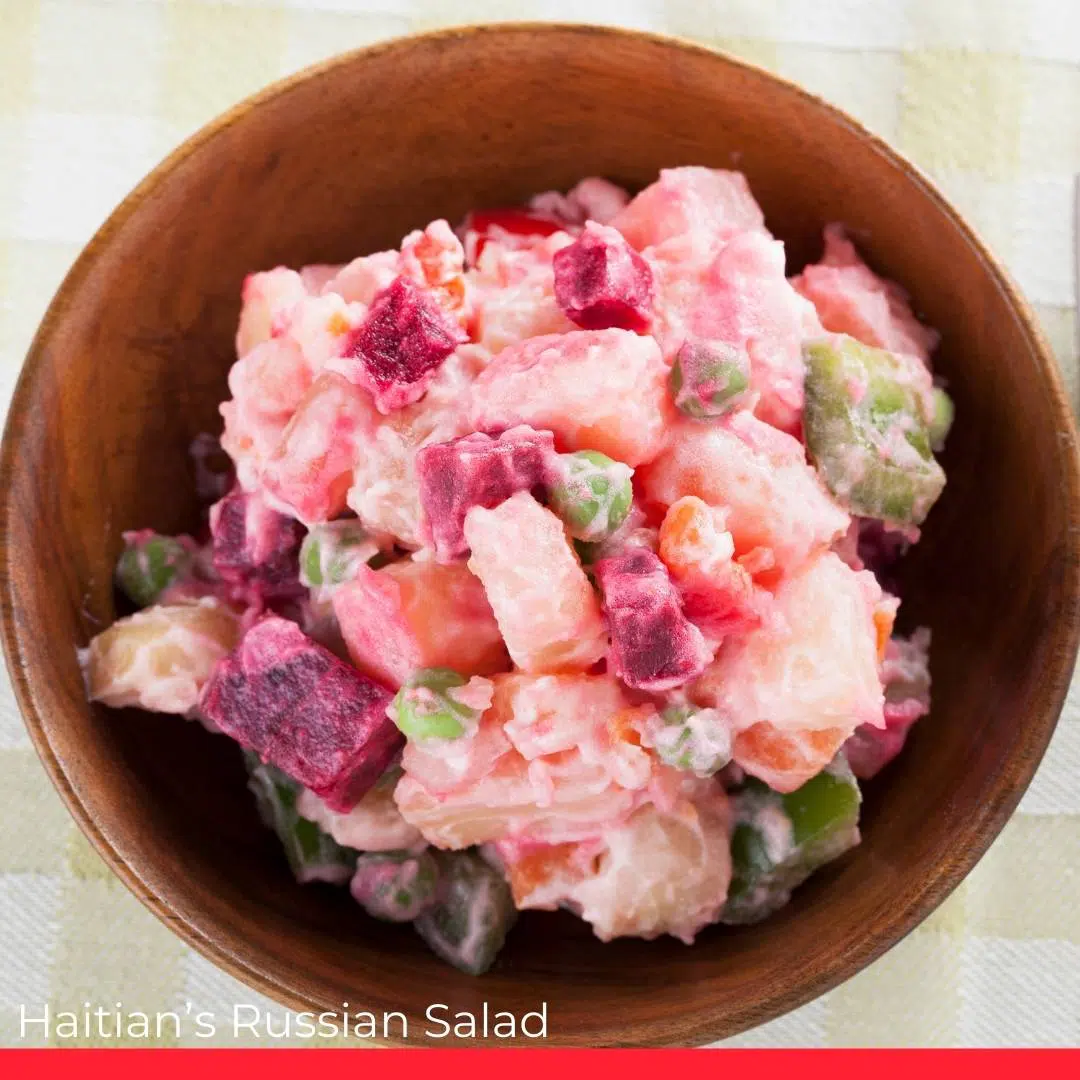
No matter what Haitian event you’re attending, potato and beet salad almost always finds its way onto the table.
This famous Haitian combo is a special local take on the more traditional versions of the Russian salad. It is a colorful salad made of potatoes and mayonnaise mixed with the beet’s scarlet color, making it appealing to the eye and the palate. It is found in every Haitian home during the holidays and on Sundays and is often accompanied by rice djondjon or macaroni gratin.

8. Akasan
Akasan
Photo Credit: tesstheswede

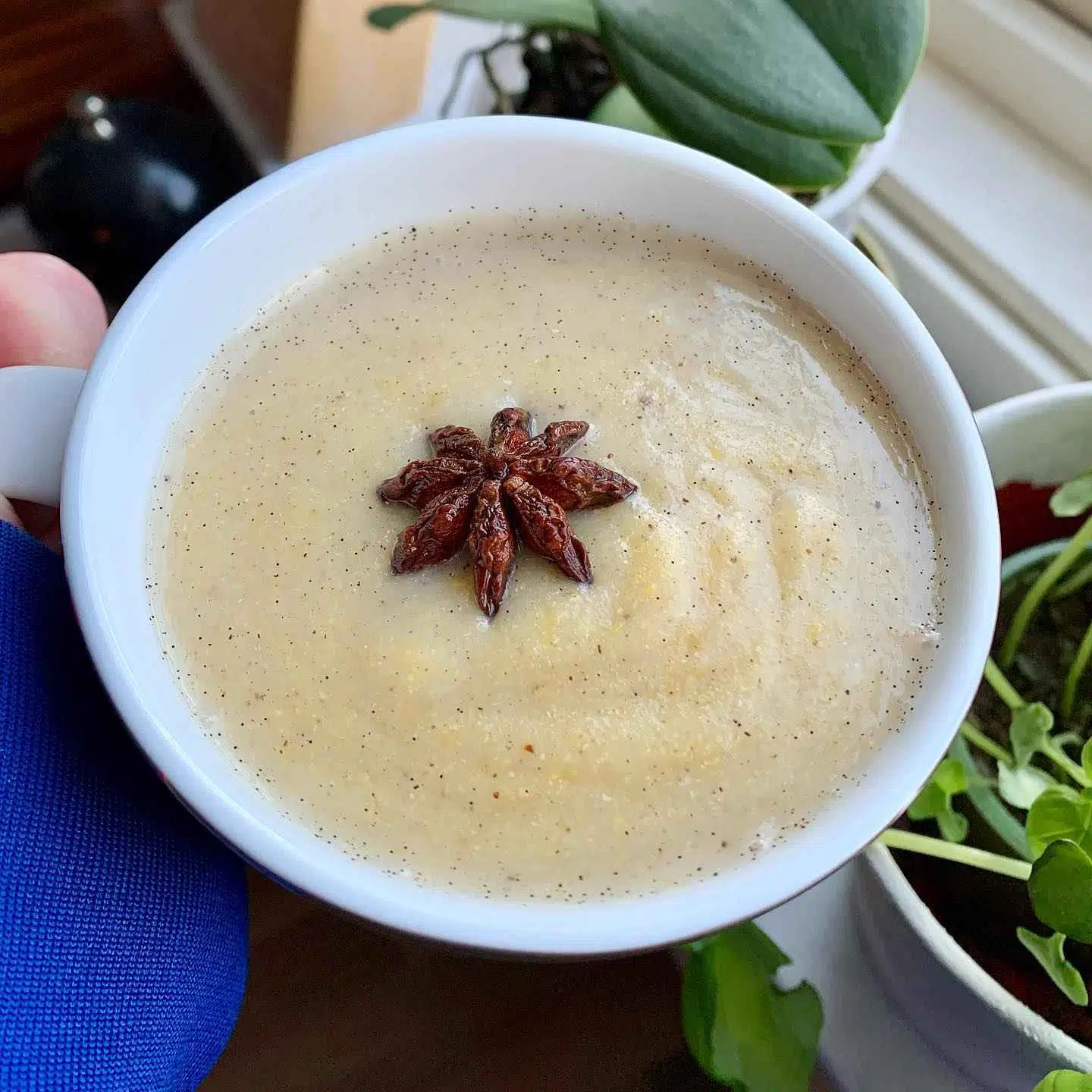
Akasan is a specialty found throughout Haiti. Usually served hot or warm at breakfast accompanied by bread, it is a real treat for the stomach and a source of income for the many vendors who sell it.

This drink is prepared with cornmeal or milled corn kernels, milk (as desired), and aromatic spices such as cinnamon. These ingredients make akasan a filling drink that’s also a valuable source of nutrients. 

9. Tchaka

Tchaka
Photo Credit: haitianchef

Tchaka is one of the most popular specialties of Haiti. It combines red peas, dried cracked corn, and smoked and salted pork meat (especially pig’s trotters). It needs to simmer for many hours for the flavors to develop and takes a day to prepare.

Although a bit time-consuming, the preparation of this dish is quite simple. The peas and corn are cooked separately and then mixed with the pork. The mixture is spiced to taste and left to simmer until the tchaka has the desired rich consistency. A simple but mouth-watering preparation that’s well worth waiting for.

10. Kasav

Kasav
Photo Credit: dearself_hc

This versatile bread is made from manioc. It is usually eaten for breakfast, as a snack, or in the evening with butter, mamba, jam, avocado, or anything else you feel like. It can also be filled with coconut – really, the only limit is your imagination!

11. Dous Makòs

Dous Makòs
Photo Credit: ccdelightss

Dous Makos is a variety of vanilla fudge originating in Petit-Goave, Haiti. The sweet usually contains three signature stripes:

  • A light-colored vanilla layer
  • A chocolate layer
  • A red layer made with food coloring

The candy was created in 1939, by Fernand Macos, who many consider the founder of the Haitian version of the Hershey family. Look out for this luscious treat whenever you’re in Haiti -it’s now a part of the country’s food culture!

12. Bonbon Siwo

Bonbon Siwo
Photo Credit: grimelle_deluxe

If you want to add the flavors of Haiti to your table, bonbon siwo, Haitian gingerbread, is the dessert for you. This hot and spicy tropical treat is also easy to make.

It’s dark and dense thanks to the coconut milk and cane syrup and is boldly flavored with fresh ginger, cloves, and cinnamon. Make this Haitian treat for your loved ones to serve with a cup of hot chocolate or milk.

13. Haitian Pork Griot

Haitian Pork Griot
Photo Credit: racheldyerphotography

Haitian griot is a recipe for marinated pork that is so succulent that even a dedicated vegetarian could make it their favorite dish! But, joking aside, there’s a good reason why Haitian griot is genuinely one of the most famous meat dishes in Haiti and a favorite at family gatherings and celebrations.

Boneless pork is marinated in a broth of citrus, garlic, onions, shallots, and a mixture of spices before being pan-fried until crispy. You can accompany the griot with rice, bannann peze (fried plantain) and don’t forget to add some pikliz (pickled veggies).

14. Diri Djondjon

 Diri Djondjon
Photo Credit: @fabian100e

Diri djondjon is a classic Haitian rice dish cooked with local black mushrooms called “djondjon”. These provide a unique flavor and impart a striking gray-black color to the rice. 

Djondjon rice is cooked like traditional rice, but seasonings and additional ingredients vary. Although it’s typically prepared with lima beans, fresh or frozen peas can make an acceptable substitute! It will be just as good. The dish can also be served with fish, chicken, or shrimp mixed into the rice, making it extra filling and delicious.

15. Bouillon tèt kabrit

Bouillon Tèt Kabrit
Photo Credit: roeskwizin_


Bouillon tèt kabrit is a traditional dish that receives very mixed reviews. The name means ‘bouillon with a goat’s head’ in English, and an entire goat’s skull is one of the key ingredients.

The tender goat meat is simmered in a traditional Creole sauce for this Haitian dish, including the goat’s guts and intestines. It is served with seasonal vegetables or rice for a mouthwatering and hearty meal worth trying.

16. TomTom ak Kalalou Gombo
TomTom ak Kalalou Gombo
Photo Credit: creolemeup

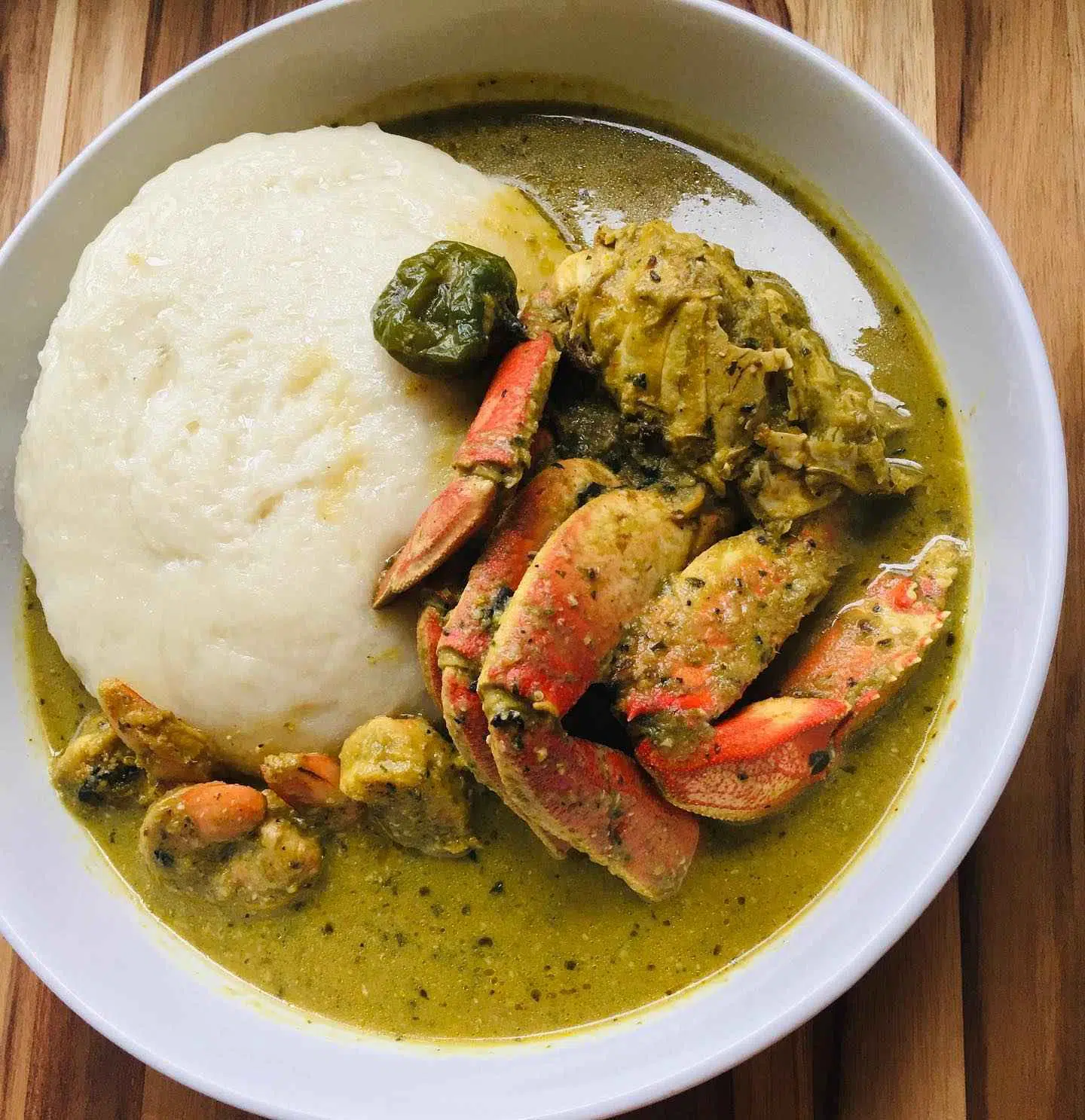
Although Tomtom ak Kalalou Gombo is now considered a specialty of Jeremie in southern Haiti, in colonial times, it was the daily meal of Haitians. It’s made from boiled and crushed breadfruits served with seafood and okra sauce.

Tomtom ak kalalou is made for sociable mealtimes. The traditional way to serve this dish is to place the mashed breadfruit in the middle of the table, the gumbo purée next to it, and invite the assembled guests to take turns digging in with their fingers. Next, they dip it into the gumbo sauce to season and finally pop it into their mouths in one go. Then pause to enjoy until the next round. This dish is the ultimate sharing experience for those who want to spend time bonding with their family.

PS: If you get the opportunity to try this dish, remember to swallow without chewing, as that is considered bad manners.

17. Pain Patate

Pain Patate
Photo Credit: cottiedelicious

Looking for a dessert to warm you up? Pain Patate is undoubtedly one you should look out for. Very popular among Haitians, it’s prepared with healthy sweet potatoes and spices. 

The consistency can be anything from meltingly soft to as firm as banana bread, depending on the cook. However, if you like desserts, it’s guaranteed you’ll love this.

18. Diri ak Lalo
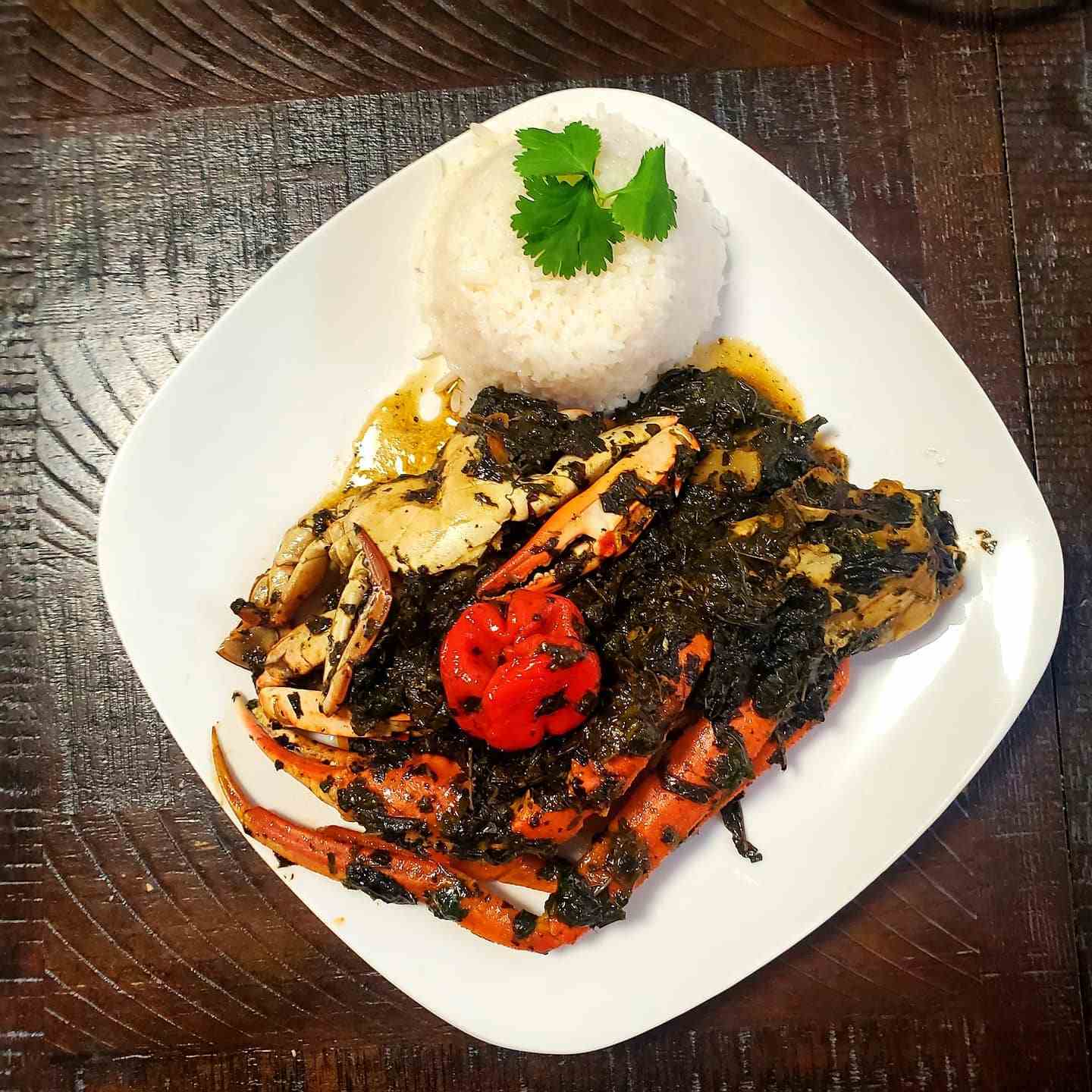
Diri ak Lalo
Photo Credit: turennekathleen

Diri ak Lalo is a traditional stew based on dark green lalo (jute leaves). This dish, when served with crab, is typical of Artibonite cooking and is one of their signatures takes on Haitian cuisine. This flavorful dish can also include beef or be meat-free and is served with national white rice.

19. Bouillie de Bananes Plantains

Labouyi Bannann
Photo Credit: the.lady.ghost

Another Haitian breakfast favorite is Labouyi Bannann (plantain porridge). It’s a must-try for every visitor to Haiti. 
Porridge has long been an integral part of Caribbean cuisine. As a nutritious, low-glycemic carbohydrate full of fiber, porridge keeps you feeling full for an extended period. Rather than more common grains such as oats, wheat, and corn, Labouyi uses plantains. The result is meltingly soft, creamy, and light.

20. Mayi Moulen ak Zepina (Corn and Spinach)

Mayi Moulen ak Zepina
Photo Credit: savorythoughts

Corn with spinach is a typical Haitian dish. Fresh local spinach is chopped and sautéed with onions and tomatoes. The coarse corn is then boiled to create a smooth, chewy cornmeal paste.

As Mayi is an excellent source of protein and iron, it’s typically served at breakfast with slices of fresh green avocado – the perfect energy boost to start the day. When planning a busy day’s sightseeing, there’s nothing better than this spinach corn dish to keep you energized all day.


Related: Most Popular Haitian Desserts
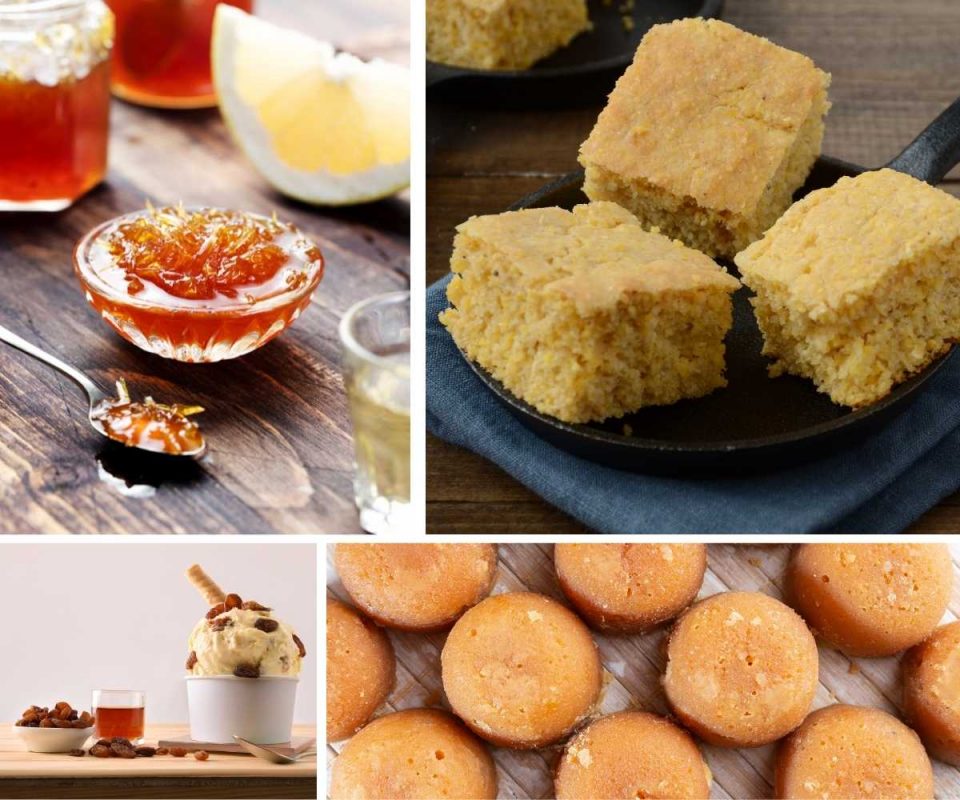
Haitian Desserts

Related: Unmissable Haitian Christmas Foods

10 Haiti Christmas Food

The post Haitian Food: 20 Best Dishes to Try in Haiti appeared first on Chef's Pencil.


from Chef's Pencil https://ift.tt/AJTZaO6
via https://chefsspenncil.blogspot.com

Pork Tenderloin w/ Porcini, Hummus and Creamy Polenta

Pork tenderloin with hummus and creamy polenta is a flavorful and satisfying dish that combines tender pork, earthy porcini mushrooms, aromatic herbs, and rich red wine sauce.

The dish’s taste is savory and comforting, with the pork tenderloin imparting a rich meatiness balanced by the creaminess of the polenta and the nutty flavor of the hummus. The red wine sauce adds a subtle sweetness and acidity, while the porcini mushrooms provide a robust umami flavor.

Enjoy!

Pork tenderloin with porcini mushrooms, hummus and polenta
Print

Pork Tenderloin with Porcini, Hummus & Polenta

All I am saying is: pork tenderloin, porcini mushrooms, creamy polenta with herbs and red wine sauce! Just delish!
Servings 4 servings

Ingredients

  • 900 g pork tenderloin
  • 150 g butter
  • 500 g porcini mushrooms boletus
  • 150 g onions
  • 2 garlic cloves
  • 150 g corn flour
  • 500 ml milk
  • 200 ml red wine
  • 100 ml chicken stock (or beef stock)
  • 3 twigs thyme
  • 2 sprigs rosemary
  • salt
  • pepper

Instructions

  • Combine the milk and an equal amount of water, add salt and boil in a covered pot on low heat. When it starts to boil, add the corn flour and whisk until the polenta is done. Add the finely chopped herbs and 50g (1.75 oz) butter then put aside.
  • Season the pork tenderloin with salt and pepper and fry on all sides in a pre-heated pan. Transfer to a tray and bake for about 15 minutes at 180°C (355°F).
  • In the same hot pan used for frying the pork, add the red wine and let it reduce to a quarter of the initial quantity. Add the stock and continue to boil the reduction. Add 20g (3/4 oz) of cold butter and mix well, over high heat, until the sauce reaches the right consistency.
  • Slice the onion into large cubes, add the minced garlic and sauté in butter (80g or 2.75 oz), over medium heat until golden.
  • Add the porcini mushrooms cut into large pieces, fry briefly then add the thyme and rosemary. Continue to cook the mushrooms until they brown.
  • Enjoy!

Notes

 
Pork loin with hummus and creamy polenta

The post Pork Tenderloin w/ Porcini, Hummus and Creamy Polenta appeared first on Chef's Pencil.


from Chef's Pencil https://ift.tt/3FsqCnh
via https://chefsspenncil.blogspot.com

Sunday, April 9, 2023

10 Foods and Drinks of Paros and Naxos that You’ll Love!

Though Santorini and Mykonos are the most famous of the Greek islands of the Aegean, the heart of the Cyclades beats in Paros and Naxos.

They are lesser known, more verdant, and amazingly versatile as holiday destinations: you can combine the cosmopolitan and the traditional, adventure and leisure, luxury and authenticity, romance and family, stunningly gorgeous beaches and interesting hiking paths, while also avoiding the crowds. 

Situated at the very center of the Cyclades, Paros and Naxos are popular with the locals for those exact reasons, and, of course, the amazing food. Both islands have a rich history that goes back to neolithic times. From vineyards and a thriving fishing culture to the unique demands of growing produce locally, Parians and Naxians developed their own niche version of the famous Greek cuisine

Certain local products, such as cheese, wine, and a special variety of local potatoes, are renowned all over Greece for their quality and taste. The special local dishes that these unique products yield are simply irresistible. All that history, culture, experience, local conditions, and love of good food is what makes Naxos and Paros prime culinary destinations.

And if you’re up for fine dining, you will get plenty of options of that, too! There are just so many delicious dishes to try, but you have to start somewhere! This short list of must-have dishes is the best gateway to discovering the amazing tastes of Naxos and Paros.

The Culinary Heritage of Paros and Naxos

Both islands have been integral to the trading and communication among all the Cyclades. But they also served as a bridge between the East and a good part of the Greek peninsula. 

Paros became extremely affluent thanks to its renowned Parian marble, which was used for religious buildings and sculptures. Being on trade routes also helped Parians develop a melting pot of flavors and methods for cooking that blended through the ages. The importance of this island remained prominent during the Byzantine Era and later when it was occupied by the Venetians and, a few centuries later, by the Ottomans.

These influences remained strong into modern times, where a cosmopolitan atmosphere began to prevail and tourism became an important part of the local economy. Cheese, wine, and fish are staples for Parian cuisine, combined with local legumes and vegetables for unique pies, casseroles, and combinations.

Naxos has a similar history, with the added element of religious importance, as evidenced by the effigies found there, similar to those found in Delos, the most sacred of islands for the Ancient Greeks.

The cuisine of the island began with a culture of livestock raising and interbreeding in antiquity, and was characterized by the unique Naxian potato and Naxian cheese. Fricassees and roasts with the opulent side dishes are what you should look for on Naxos, coupled with salads and vegetable dishes to balance out the meal. 

When visiting these islands, look out for the following renowned dishes.

1.  Kakavia from Paros

Paros’ Kakavia
Credits: greekgastronomyguide.gr

You may think that fish soup is a pedestrian meal, but you’d be wrong! This very special fish soup is a traditional fisherman’s meal that developed through the ages. Fishermen would only eat that part of their catch that they couldn’t sell, including fish that were too small or were a species that didn’t appeal to customers. They would cook several different fish together in a big pot, making an extremely fragrant and tasty stock in which they would then cook potato and celery. 

For it to be called kakavia, the soup must have at least eight different fish, from scorpion fish and white seabream to combers, rainbow wrasses, and several types of mullets.

2. Gardoumia from Naxos

Naxos’ Gardoumia
Credits: greekgastronomyguide.gr

This may be a bit of a controversial dish in the EU, since it’s technically prohibited; but not for Greece and certainly not for Naxos! It’s considered one of the staple delicacies of the island and served for any kind of important gathering. In the rest of Greece, it’s considered an Easter food, thanks to its opulent flavor.

Gardoumia is made from the belly of lamb, cut in strips and mixed with the animal’s innards. Then, it all is made into a sausage-like shape by wrapping intestines very thickly and very tightly all around the meat.

The intestines are meticulously cleaned, washing them until “milk white”, otherwise they’re not considered fit for the dish. The gardoumia can be roasted, fried, boiled, or baked, depending on the version of the dish and the particular area of Naxos. Make sure you taste it in all versions!

3. Stuffed Squid from Naxos

Naxos’ Stuffed Squid
Credits: tripadvisor.com

Stuffed squid is the absolute comfort food that’s also quite nutritional and healthy. It’s made of squid stuffed with a special mix of rice and chopped up squid, herbs, onions, and garlic.

It’s then cooked twice, once over very a high heat for a few seconds, then slowly over a low heat to allow all the juices and flavors to blend into a balanced, fragrant, delicious meal.

4. Sefoukloti (Chard Pie) from Naxos

Naxos’ Sefoukloti (chard pie)
Credits: dianekochilas.com

This unique pie can be savory or sweet, and has a filling of chards. Made with special hand-kneaded phyllo, if it’s sweet there will be raisins, cinnamon, and sesame in the filling, and a lot of caramelized sugar.

If it’s savory, there will be a variety of herbs and cheese. Both versions are very fragrant and surprisingly tasty. You haven’t had chards like these before!

5. Revithada (Chickpea Stew) from Paros

Paros’ Revithada (chickpea stew)
Quelle: @mychicdish

Chickpeas are generally a staple of Paros, cooked frequently and for large family or neighborhood gatherings. You will be served revithada for panigyria (saints’ commemoration days) and for other celebrations. They make a lush, rich dish that manages to be healthy and nutritious.

Chickpeas are cooked in olive oil and tomato, with herbs to add fragrance. Tradition has it that they are cooked slowly overnight in a stew, so they are tender and melt in the mouth when ready to serve. 

6. Gouna (Suncooked Fish) from Paros

 Paros’ gouna (suncooked fish)
Credits: friendsofparos.com

Gouna is a traditional way for Parian fishermen to prepare fish for the grill. The fish are sun-dried for hours under the scorching summer sun, pre-cooking it to the point that its flavor changes. Usually, fish high in fat are used, especially varieties of mackerel. 

The fish are scaled, gutted, and cleaned in brine – traditionally, they were cleaned and brined in seawater – then left to dry under the sun. This made the fish tender and succulent, and ready for the grill. The result is an irresistible appetizer with a texture and flavor you won’t have tasted before!

7.  Rosto from Naxos

Naxos’ rosto
Credits: greekgastronomyguide.gr

Rosto is a popular Naxian dish that is much loved all over Greece. It is tender pork, cooked slowly in a pot with oil, tomato, and garlic over a low heat. It cooks for as long as it takes for the meat to become very soft and imbued with its own juices and those of the sauce. It is served with fresh buttered pasta that is often pre-mixed in with the rosto sauce.

8. Melachrino from Naxos

Naxos’ melachrino
Credits: greecefoodies.com

Melachrino is probably the most famous Naxian dessert. It’s name means “the brunette one” because it’s very dark thanks to the cocoa it contains. It’s a unique type of walnut cake that is scented with the local citrus liquor that is only made on the island.

The cake also has cinnamon and cloves, to add to the aroma, and is then doused in honey and sugar syrup, for that extra sense of rich opulence. It’s a great conclusion to a hearty meal or an excellent side to your coffee in the afternoon.

9. Sweet Mitzithropita from Paros

Paros’ sweet mitzithropita
Credits: lifo.gr

If Greece has an ethnic cheesecake, this is it! The Parian mitzithropita is a delicious dessert made with honey, mastic, and cinnamon mixed with a soft white cheese called mitzithra. Although called a pie, no dough is involved. It’s just the mix of the ingredients with the household’s favorite blend of nuts, baked into a fluffy perfection you will absolutely love.

Learn more about traditional Greek desserts.

10. Drinks from Paros and Naxos

Citrus fruit liqueur from Naxos: The island is famous for its unique citrus fruit liqueur, which comes in three varieties. They are used in many of the island’s staple dishes for extra fragrance and flavor, and they are served as after-meal treats together with dessert. 

Naxos’ citrus fruit liqueur
Credits: greektravel.com

Souma from Paros: Souma is an incredibly potent alcoholic drink made from grapes and rivals ouzo, tsipouro, and raki in the punch it packs. Consume carefully, and with the appropriate food!

Paros’ souma
Credits: gastronomytours.com

PDO wines from Paros: With a wine making heritage that heralds from ancient times, the wines of Paros are considered some of the highest quality. Make sure to sample the white Monemvasia wine, which is considered the cream of the crop, as well as the Paros Reserve, made from a combination of Monemvasia and Mandilaria varieties.

Paros’ PDO wines
Credits: @carmenguerriero_winefood

Paros and Naxos are the Cyclades’ unadulterated gems, waiting for you to discover them on all levels, from natural beauty to gorgeous beaches to incredible heritage and history to excellent food of amazing variety. This short list only scratches the surface of the wealth of flavor that awaits you, so make sure to explore even more with every taverna you visit!


Related: Most Popular Foods in Crete

15 Mouth-Watering Cretan Foods You Won’t Be Able to Resist!

Related: Most Popular Traditional Foods from Rhodes

10 Delicious Traditional Foods from Rhodes You Will Love!

The post 10 Foods and Drinks of Paros and Naxos that You’ll Love! appeared first on Chef's Pencil.


from Chef's Pencil https://ift.tt/TWUNX93
via https://chefsspenncil.blogspot.com

Baked Cajun Pork Ribs w/ Potatoes & Garlic Sauce

These baked cajun pork ribs with potatoes and garlic sauce is a mouthwatering dish that combines a unique blend of spices to create a bold and flavorful taste.

The result is a tender and juicy meat with a crispy and slightly spicy crust. The combination of sweet and savory spices creates a depth of flavor that is truly satisfying. These ribs are served with a baked garlic sauce that perfectly complements the spiciness of the meat.

The texture of the meat is tender and juicy with a crispy exterior, making each bite a genuinely delightful experience.

Enjoy!

Cajun crusted Pork Ribs with baked garlic sauce
Print

Baked Cajun Pork Ribs with Potatoes & Garlic Sauce

A gourmet pork ribs recipe that will wow you!
Course Main Course
Cuisine American
Prep Time 25 minutes
Cook Time 2 hours 30 minutes
Total Time 2 hours 55 minutes
Servings 4 servings
Author Razvan Stupar

Ingredients

  • 1.2 kg pork ribs
  • 1 tsp. sweet paprika
  • 1 tsp. pepper
  • 1 tsp. salt
  • 1 tsp. dried oregano
  • 1 tsp. dried thyme
  • 1 tsp. cumin
  • 1 tsp. allspice
  • 1 tsp. sugar
  • 1 tsp. garlic powder
  • 1 tsp. ginger powder
  • lemon zest from one lemon
  • 2 garlic bulbs
  • 15 ml balsamic vinegar
  • 100 g mayonnaise
  • 6 large potatoes
  • 1 sprig of rosemary
  • 20 ml cooking oil

Instructions

  • Remove the back silver skin from the ribs and season with salt and pepper. Wrap in baking paper and cover with aluminum foil.
  • Put the ribs in a tray with a little water and bake in a pre-heated oven for 2 hours at 180°C (355°F).
  • Put the whole garlic bulbs in the oven until they soften. Then cut off the bulb base and squeeze the garlic pulp into a bowl. Add the mayonnaise, balsamic vinegar, salt, pepper and then blend until smooth.
  • In a bowl, mix the sweet paprika, pepper, salt, oregano, thyme, cumin, allspice, sugar, garlic powder, ginger powder in equal quantities and add the lemon zest.
  • Wash the potatoes and cut into 6 pieces (without peeling). Add the rosemary, salt, pepper and 1 minced garlic clove.
  • Place in a tray in the oven with a little oil and bake at 180°C (355°F) for about 1 hour.
  • Before serving, remove the ribs from the foil, cover with a thick layer of the Cajun spice mixture and let brown in the oven for another 5-10 minutes.

Notes

Baked Cajun Pork Ribs with Potatoes & Garlic Sauce
Baked Pork Ribs with Baked Garlic Sauce
baked garlic sauce

The post Baked Cajun Pork Ribs w/ Potatoes & Garlic Sauce appeared first on Chef's Pencil.


from Chef's Pencil https://ift.tt/fASz1Qx
via https://chefsspenncil.blogspot.com

Friday, April 7, 2023

How to Decant Wine

Let’s start with the why first: why decant wine to begin with?

Decanting wines is primarily done for two purposes. Firstly, to pour off any sediment that may have formed at the bottom of a cellar-stored bottle. Secondly, to aerate (breathe) younger wines by allowing it to take in oxygen. This will help the wine to develop its full flavor potential.

Serving wine in a nice crystal (or glass) carafe is also an upgraded presentation on your dinner table. However, it is important that the bottle of the wine is presented next to the carafe so that your guests can find out about the wine’s grape variety, age and origin.

Timing the decanting is important. In general, younger wines and robust wines can be decanted and allowed to breath up to 6 hours ahead of serving, while older and vintage wines are decanted only a short time before serving.

How to decant old wine

Old wines that have been stored and aged in a cellar properly often contain sediment due to the aging process. Decanting means pouring the wine into a decanter (carafe) and leaving the sediment in the bottle.

  • The bottle should be taken out of the familiar horizontal position (cellar position) and stood up for an hour. The sediment will then settle at the bottom of the bottle.
  • Very carefully open the wine, as shaking the bottle will disturb the sediment that has settled at the bottom.
  • Due to the color of the bottle (mostly green glass), it is advisable to work with the neck of the bottle in front of a small light or a candle. This will help you to see the sediment as it reaches the neck.
  • Hold the bottle below the neck and bring it to a 140-degree angle to the carafe. Start at approximately 120 degrees and while the bottle empties, increase the angle, letting the wine flow ever so gently into the carafe.
  • This process might take several minutes and should not be rushed. Towards the last part of the bottle, watch carefully for the sediment and stop pouring when any appears in the neck of the bottle.
  • Let the wine rest for a while before serving as the motion of decanting may have “unsettled” the wine.
  • Brass and silver decanting cradles are available, which certainly make sense for the serious wine lover. The bottle is horizontally suspended in a cradle with a cranking system ensuring a perfectly smooth tilting action and as little disturbance to the wine as possible.

How to decant (aerate) younger wines

Young, but full-bodied, robust wines often benefit from being aerated or decanted. The aim here is that the wine comes into contact with as much oxygen as possible, and this in turn will help to develop the wine’s aroma and bouquet.

Contrary to older wines, it is quite alright if the wine splashes around as it is being poured into the decanter or carafe. In general, a wide bodied decanter is better suited for aerating wines, as once inside the decanter, the wine has a bigger surface exposed to the air and can therefore better develop its flavor and aromas.

While the wine breathes, it will settle and calm after being awakened as it was poured from the bottle.

Enjoy!

Related: 10 Best Hungarian Sweet Wines

Related: Best gifts for wine lovers

The post How to Decant Wine appeared first on Chef's Pencil.


from Chef's Pencil https://ift.tt/FaglChy
via https://chefsspenncil.blogspot.com

Cities & Countries with the Most Michelin Restaurants per Capita

Why does this matter? The Michelin Guide has long been used as a marketing tool to promote cities, regions and countries as prime fine-dini...